The long, strange, and frequently misremembered story of a plant: from a 1619 law that
ordered colonists to grow it, to the tonic on your great-great-grandparent’s medicine
shelf. And the part worth bookmarking: the cannabis “facts” everyone repeats online,
fact-checked and set straight. Short reads, every claim sourced.
For most of American history, cannabis wasn’t contraband. It was rope, medicine, and a Victorian curiosity.
America’s first cannabis law ordered colonists to grow it
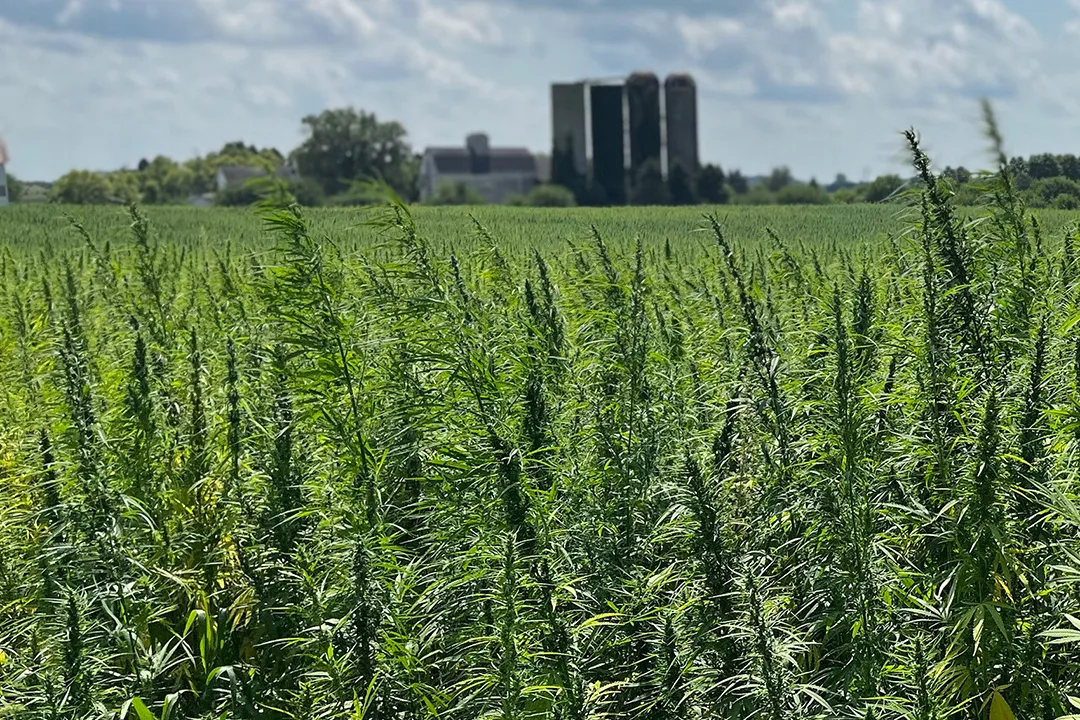
In 1619, the first General Assembly of Virginia at Jamestown ordered every householder to plant hemp: the sailcloth and rigging that powered an age of sail depended on it. Massachusetts (1631) and Connecticut (1632) soon passed their own “grow-it” mandates. America’s first cannabis law was a command to plant it; its most famous modern one was built to stamp it out.
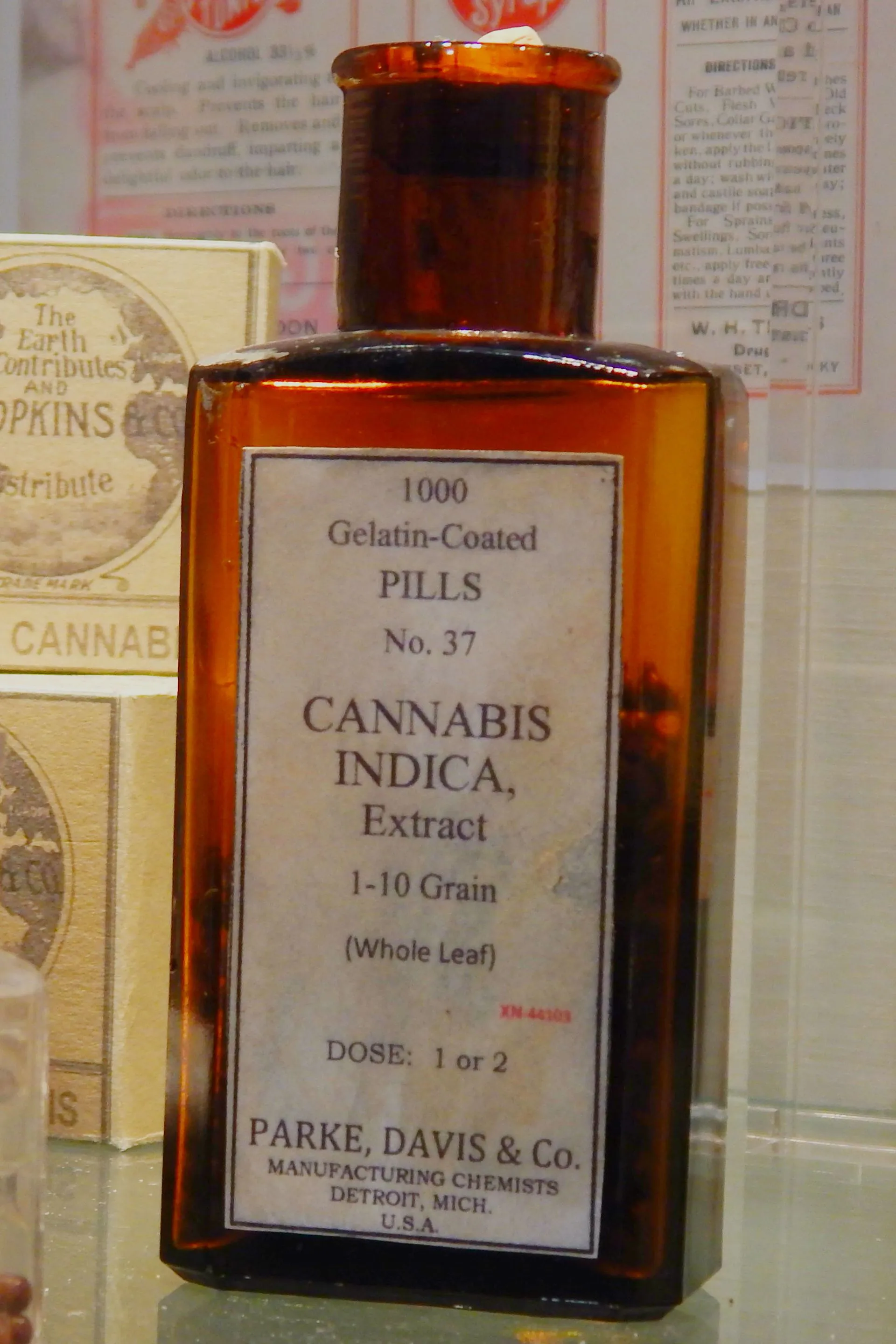
From the 1850s until 1941, cannabis was listed in the U.S. Pharmacopeia and sold over the counter (no prescription) by Parke-Davis, Eli Lilly, and Squibb, usually as an alcohol-based tincture for migraine, insomnia, and pain. It was quietly removed in 1941, at Harry Anslinger’s urging.
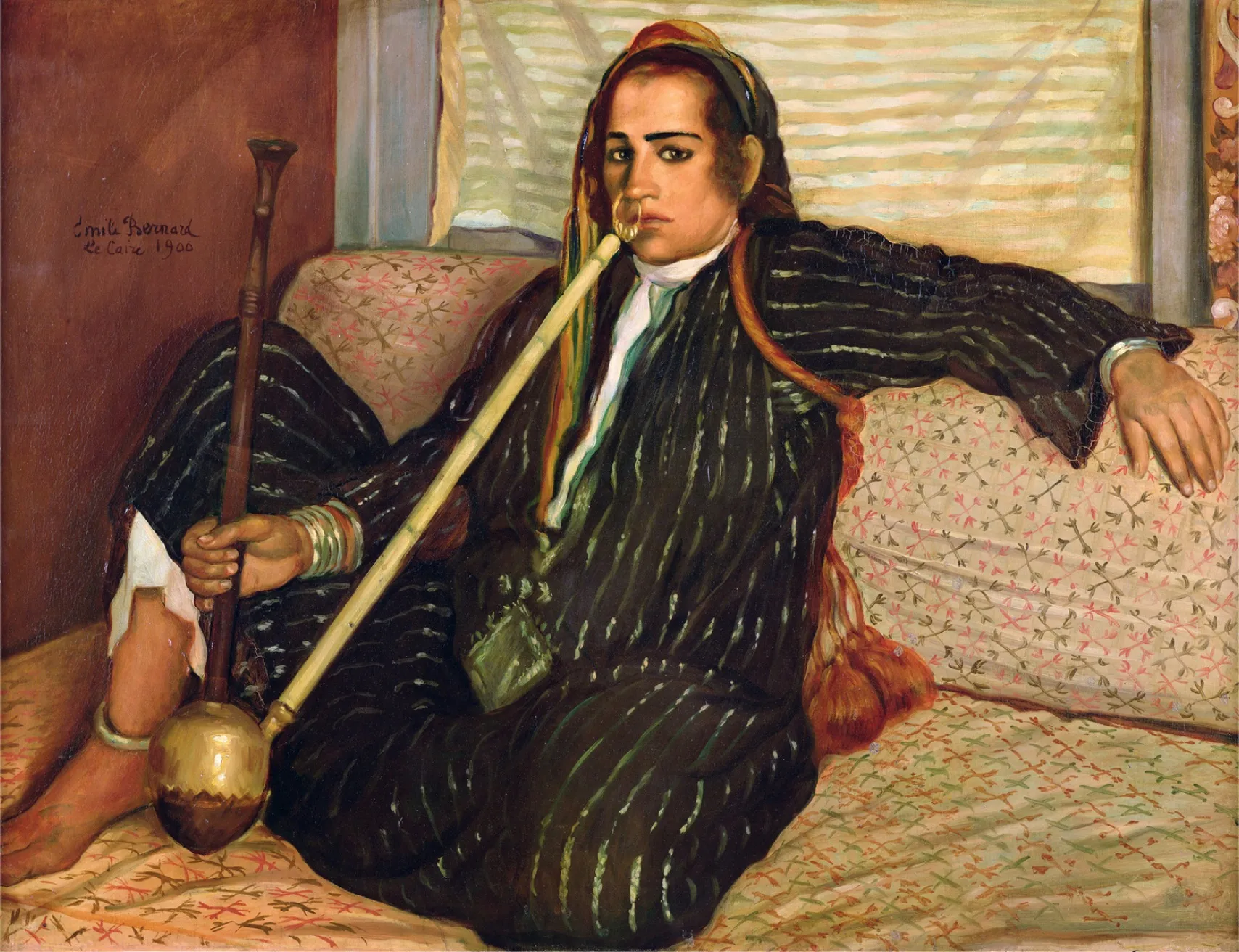
In 1857, American writer Fitz Hugh Ludlow published “The Hasheesh Eater,” a vivid cautionary memoir that helped spark a craze: mail-order “Hasheesh Candy,” and well-dressed gentlemen puffing Turkish hash pipes at the 1876 Philadelphia Centennial. (The lurid “hundreds of hashish parlors in New York” line traces to a single 1883 magazine story. Enjoy it as period color, not a census.)
The 1906 law that printed “cannabis” on the bottle
The Pure Food and Drug Act of 1906 didn’t ban cannabis. It required patent medicines to disclose “dangerous” ingredients. So for the first time, ordinary shoppers saw “cannabis” listed right beside alcohol, opium, and cocaine on the label of their cough syrup and sleep tonic, still sold without a prescription.
Prohibition didn’t arrive on the science. It arrived on fear, politics, and a carefully chosen word.
A word, weaponized
Cannabis had been in American medicine for decades, listed as “cannabis.” The smokable, recreational form arrived with Mexican immigrants after the 1910 revolution, and prohibition crusaders pointedly switched to the foreign-sounding “marihuana” to tie the drug to immigrants and stoke fear. Same plant, two names: one chosen to frighten.
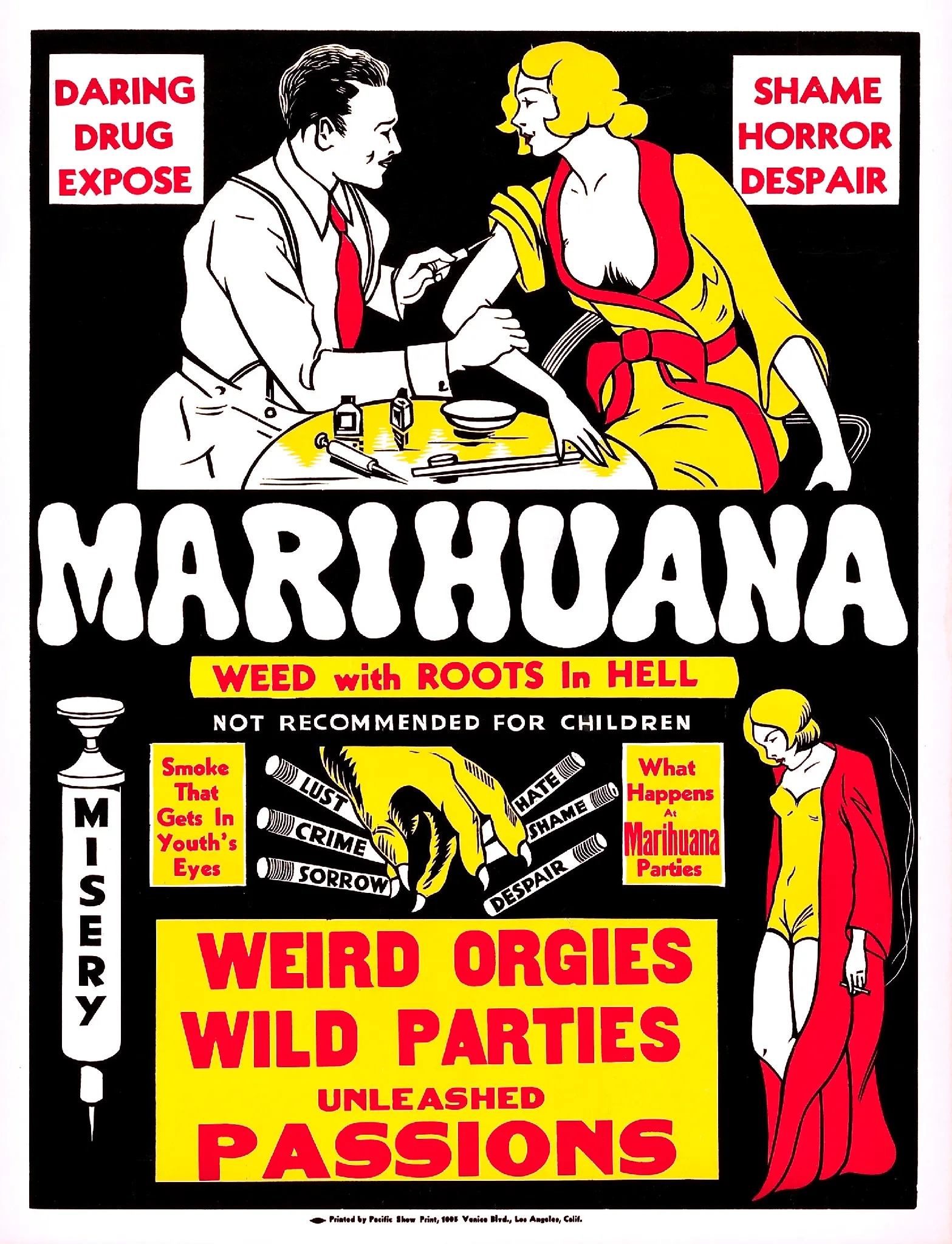
Harry Anslinger ran the Federal Bureau of Narcotics for 32 years. To pass the 1937 Marihuana Tax Act he made openly racist claims and cited lurid “Gore File” crimes that researchers later showed were fabricated or misattributed (the case he leaned on hardest involved documented mental illness, not cannabis). The 1936 scare film later known as “Reefer Madness” fed the same panic.
The study that said it was all bunk, then got buried
Skeptical of the 1937 law, New York Mayor Fiorello La Guardia asked the New York Academy of Medicine to actually study marijuana. The 1944 LaGuardia Report concluded it was not the addictive, violence-inducing, gateway menace the government described. Anslinger denounced it as “unscientific,” halted research, and had it rebutted.
The wartime film the government pretended it never made
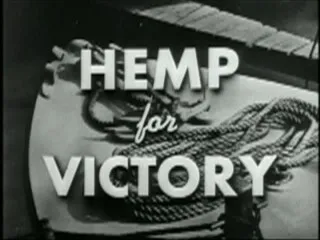
In 1942, after Japan cut off Asian fiber, the same government that had just taxed cannabis into oblivion produced a USDA film, “Hemp for Victory,” urging patriotic farmers to grow hemp for Navy rope and parachute webbing. For decades officials denied the film existed, until a copy surfaced in the National Archives around 1989.
During the long prohibition, cannabis didn’t disappear. It went to the hills, the hollows, and the Southern woods, kept alive by growers who risked everything.
The back-to-the-landers who kept it alive
In the late 1960s and ’70s, countercultural settlers moved into the rugged hills of Northern California (Humboldt, Mendocino, and Trinity counties, the “Emerald Triangle”), onto cheap land left behind by collapsing timber and fishing towns. They grew cannabis first for themselves, then as a cottage industry, perfecting “sinsemilla” (Spanish for “without seed”): unpollinated female flowers far stronger than the seedy imported “brick weed” of the day. By 1979, a California state senator told the New York Times marijuana was among the biggest crops in his district.
You weren’t imagining it. Through the 1980s the rural South and Appalachia (Kentucky, Tennessee, north Georgia) became major outdoor-growing country, with plots tucked into national forests in some of the poorest counties in America, an economy that picked up where moonshine left off. Georgia was in the thick of it: in 1983 the state’s strike force pulled up more than 660,000 marijuana plants “the old-fashioned way, by hand,” and a federal paraquat-spraying flight over the Chattahoochee National Forest drew protests and a court order. Kentucky’s legendary “Cornbread Mafia,” 70-plus growers across ten states bound by a total code of silence, was broken up in 1989 with 182 tons.
The government fought back from the air. The DEA’s Domestic Cannabis Eradication program (from 1979) put National Guard helicopters over fields nationwide; California’s CAMP raids (from 1983) coined the very name “Emerald Triangle” and triggered lawsuits over low-flying choppers and roadblocks. The crackdown had an unintended consequence: it pushed growers off the hillsides and, by the 1990s, indoors: into the hydroponic grow rooms that would define the next era.
Prohibition could have erased cannabis’s diversity. Instead, a handful of obsessive growers preserved it: planting landrace seeds smuggled in from Afghanistan, Mexico, Thailand, and Colombia, and breeding stable strains like Skunk #1. As U.S. raids intensified in the late 1980s, breeders carried their seed stock to the Netherlands, where Dutch seed banks safeguarded much of the genetic library the legal industry is built on today.
Cannabis’s American story runs straight through the South: its port of entry, its loudest early bans, and a Georgian president who put decriminalization on paper. The full arc is in our timeline’s New Orleans era.
True
Jimmy Carter asked Congress to decriminalize an ounce
On August 2, 1977, President Jimmy Carter, the Georgian in the White House, sent Congress a formal Drug Abuse Message asking lawmakers to eliminate all federal criminal penalties for possession of up to one ounce of marijuana. The famous line really is in it: penalties against possession, Carter wrote, should not be more damaging to an individual than the use of the drug itself. He was careful to separate decriminalization from legalization, keeping trafficking penalties in force and leaving states free to set their own laws. A sitting president, and a Georgian, put that in writing in 1977.
New Orleans banned marijuana early and loudly: the city council prohibited possession and sale on May 29, 1923, and Louisiana followed statewide in 1924. But the South was not first. Massachusetts restricted cannabis in its 1911 pharmacy law, California outlawed it in 1913, and Maine, Wyoming, Indiana, Utah, and Vermont all acted by 1915, mostly as quiet amendments to poison laws that drew no outcry. What New Orleans contributed was the story: the city’s sensational “marijuana menace” press coverage of the 1920s built the drug-crazed crime narrative that federal prohibitionists later carried to Washington.
Congress banned marijuana after 90 seconds of debate
The Marihuana Tax Act reached the House floor in June 1937, and the Congressional Record preserves the moment: asked what the bill was about, Sam Rayburn, then House majority leader, answered that it had “something to do with something that is called marihuana,” adding that he believed it was “a narcotic of some kind.” Legal historians Bonnie and Whitebread found the Act then passed after less than two pages of debate, without a roll call. The famous figure is softer: in a 1995 speech Whitebread put the debate at “one minute and thirty-two seconds by my count.” The astonishing brevity is documented fact; the number is one man’s count.
The internet’s most-repeated cannabis “facts,” checked against museums, court records, and peer-reviewed history, then set straight. Every one is sourced.
False
The Constitution was written on hemp paper
The signed Declaration and Constitution are on parchment (treated animal skin), not paper of any kind. Even Jefferson’s working drafts were almost certainly linen-rag paper, not hemp. The hemp-paper claim traces to a 1985 activist book, not the historical record.
The 1937 ban was a DuPont–Hearst conspiracy to kill hemp
The popular tale, that DuPont, William Randolph Hearst, and Andrew Mellon plotted to outlaw hemp to protect nylon and paper, comes from a 1985 activist book, not historians. The decisive problem: the 1937 Act didn’t ban hemp. Fiber stayed legal, and U.S. acreage actually rose during WWII’s “Hemp for Victory.” The famous Popular Mechanics “Billion-Dollar Crop” article even appeared months after the Act passed. Historians attribute prohibition mainly to racialized fear of Mexican and Black Americans.
Virginia’s 1619 assembly did tell householders to “make trial” of hemp, but only those who already had seed, alongside flax and aniseed, with no stated penalty. In reality colonists preferred tobacco, so governments spent a century offering bounties to coax reluctant farmers. A 1682 law let hemp cover up to a quarter of a person’s debts: narrow, not “legal tender,” and nobody was jailed for refusing.
No original “Betsy Ross flag” survives (the attribution rests on an 1870 family speech), so there’s no fabric to even test. Early American flags were standardly wool bunting, with linen, cotton, and silk for finer ones. “The first flag was hemp” isn’t supported.
The original 1873 Levi’s riveted “waist overalls” were cotton: brown cotton duck and indigo-dyed denim. The Smithsonian holds an actual pair of the early brown-duck cotton trousers. The hemp version is a documented urban legend.
The “25,000 uses” figure comes from a single 1938 Popular Mechanics article (promotional optimism, not a documented inventory), and the “50,000” version is later inflation. Hemp is genuinely versatile (fiber, food, oil, building materials), but the round numbers are marketing, not data.
Henry Ford built a car made of hemp, and fueled by it too
Ford did unveil a real plastic-bodied car in 1941. But it was a soybean car on a steel frame, not hemp, and it was not hemp-fueled. The famous “an axe couldn’t dent it” demo is theatrical; on the first real strike the panel actually cracked.
“Marijuana” was invented to make the drug sound Mexican
There’s real truth here: the word spread with Mexican migration, and prohibitionists exploited its foreignness. But they didn’t invent it: “marihuana” was a genuine Mexican word for the plant, and even the “madness and violence” fears came north from Mexican discourse. They leveraged the foreign sound; they didn’t manufacture it.
The 1936 film (originally “Tell Your Children”) was financed by a church group, then bought and re-cut by an exploitation-film producer, not made by the government or Anslinger’s narcotics bureau. It reflected the era’s hysteria but only became famous as a 1970s cult comedy.
The idea that the Hebrew “kaneh bosm” in the holy anointing oil means cannabis is a real but minority hypothesis (first proposed in 1936). Most Hebrew-Bible scholars read the term as calamus, or sweet cane. Genuinely interesting and unsettled, though not established fact.
He genuinely grew hemp at Mount Vernon, and a famous 1765 diary note frets he “began to separate the male from the female hemp… rather too late.” But that’s ordinary fiber farming (removing males to strengthen the stalks for rope), not a confession. There’s no evidence any founder smoked cannabis as a drug, and the viral Jefferson “smoking hemp on my veranda” quote is confirmed fake.
There’s no direct evidence Victoria’s physician prescribed her cannabis for period pain, and he joined her medical household when she was about 59. What is true: that physician, Sir John Russell Reynolds, publicly called cannabis “one of the most valuable medicines we possess.”
A 1971 Defense Department report found about half of troops had tried marijuana in Vietnam. That part is documented. But the claim that returning veterans drove domestic cultivation is folklore. Historians credit the back-to-the-land counterculture and the cutoff of Mexican imports; the veteran story lives mostly in strain-shop lore.
The Gore Files: 200 crime stories, 198 proven false
Anslinger really did keep a file of lurid crime stories, and its most famous story was Southern: Victor Licata, a Tampa youth who killed his family with an ax in 1933, retold in “Assassin of Youth” as the work of a marijuana addict. Law professor John Kaplan dug up the facts in 1970: police had petitioned to commit Licata as insane the year before the murders, a psychiatric exam diagnosed criminal insanity, and Kaplan concluded the crime flowed from a long-lasting psychosis, not any drug effect. Historians reject the gore-file stories almost universally. But the tidy “198 of 200 proven false” statistic is itself folklore: no study establishes it, and a historian who worked through Anslinger’s papers at Penn State found no organized gore file at all.
For every myth, there’s a fact that sounds made up but isn’t.
True
The Scythians really did get high, and we can prove it
Herodotus (c. 440 BCE) described Scythians throwing cannabis on hot stones inside sealed tents and “howling with joy.” In 2019, archaeologists found 2,500-year-old braziers in western China with charred stones bearing chemical traces of THC: the earliest hard evidence of people smoking cannabis to get high.
Canvas descends, via the Latin cannabaceus (“made of hemp”), straight from cannabis, because canvas was literally hemp cloth, used for ships’ sails and rope. Same root, different spelling.
Around 1971–72, students at Stanford’s AI Lab used their ARPANET account to arrange a small marijuana sale to counterparts at MIT, documented by tech journalist John Markoff. No money moved electronically, so it’s the first online deal, not the first online payment.
A DEA judge called cannabis one of the safest substances known
In 1988 the DEA’s own chief administrative law judge, Francis Young, ruled that “marijuana, in its natural form, is one of the safest therapeutically active substances known to man,” and recommended rescheduling. The DEA administrator overruled him, and cannabis stayed Schedule I.
The line between hemp and marijuana is basically arbitrary
The 0.3% THC threshold that legally separates “hemp” from “marijuana” comes from a 1976 botany paper by Ernest Small, who called it an admittedly arbitrary guide, not a measure of what gets you high. It was later written into the 2018 Farm Bill, and now defines a multibillion-dollar industry.