Live Oak Cannabis · A visual history
A history
worth scrolling
Cannabis has been medicine, sacrament, contraband, and medicine again. Scroll through the whole arc: global origins, the U.S. century of prohibition, and the South’s programs today, all laid out on one timeline.
“One of the most valuable medicines we possess.”
Sir John Russell Reynolds, physician to Queen Victoria, 1890
23 eras · c. 4000 BCE to 2026 · every era cited to primary sources · verified 2026-07-05
-
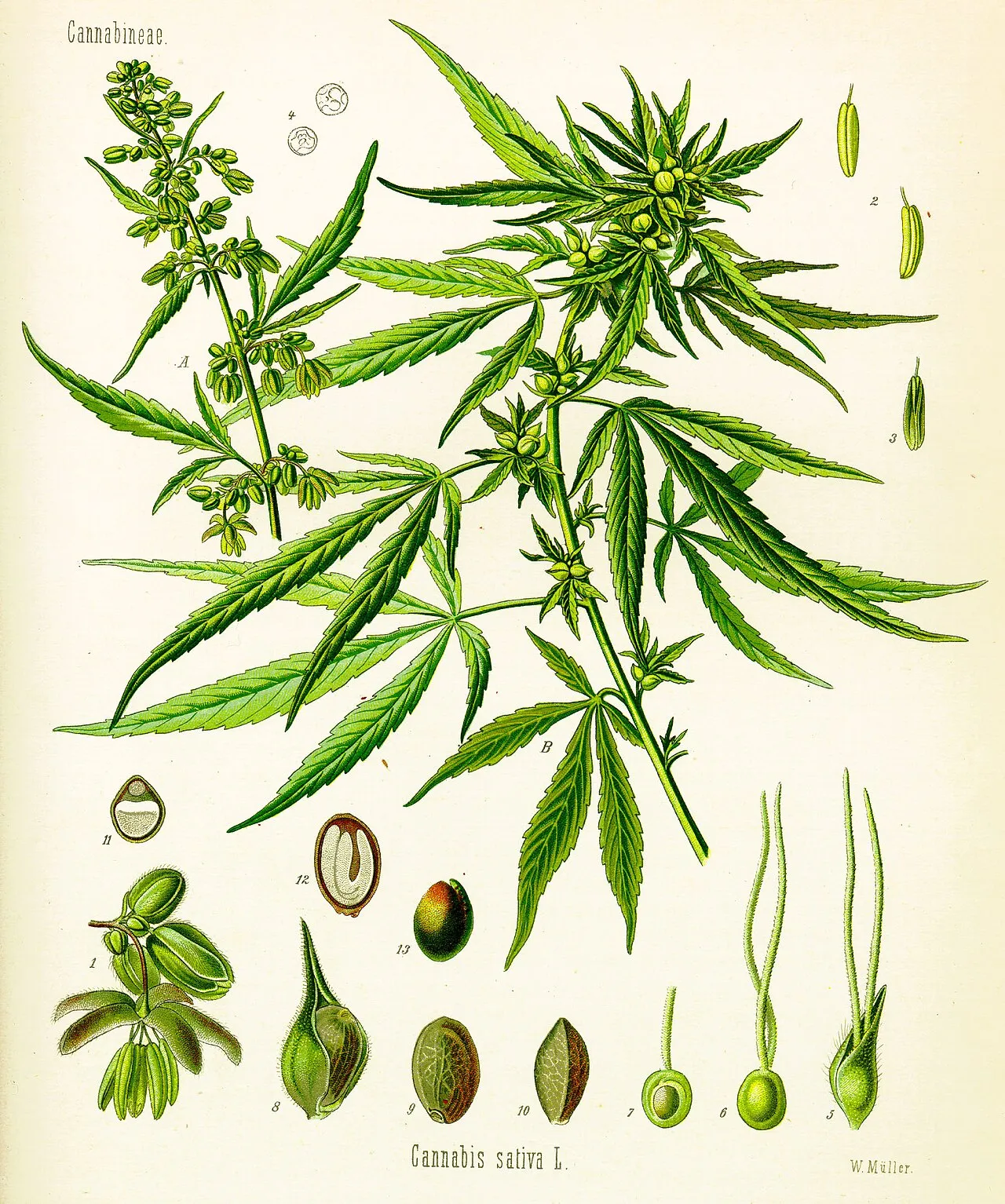
Köhler’s Medizinal-Pflanzen · 1887
For most of recorded history, cannabis was simply medicine.
It sat on pharmacy shelves from Calcutta to London to Atlanta.
Then one generation renamed it, and made it a crime.
This is the whole story.
Cannabis sativa, from Köhler’s Medizinal-Pflanzen (1887) · source · Public domain
-
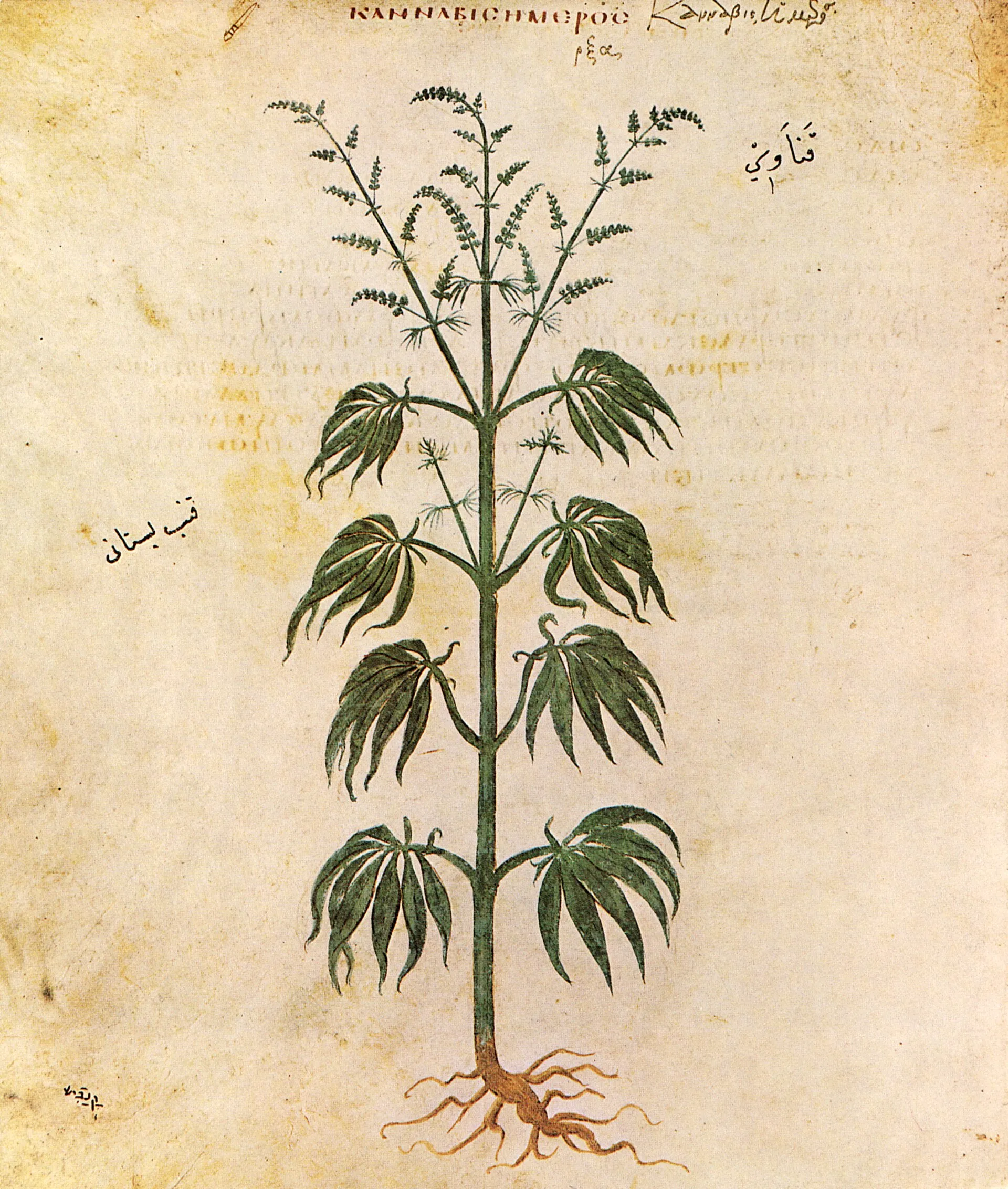
The oldest surviving illustrated cannabis entry: Vienna Dioscurides, fol. 167v (c. 512 CE) 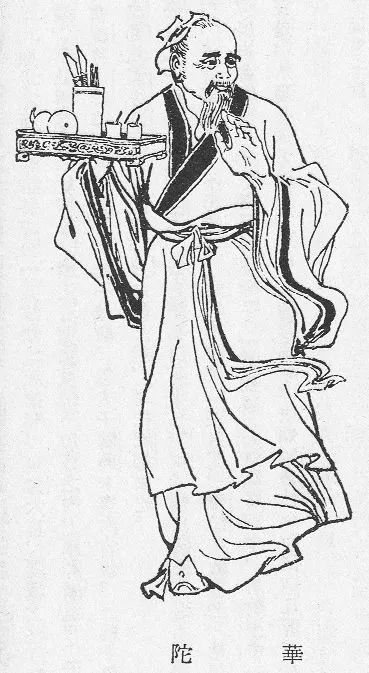
Hua Tuo, credited with an early surgical anesthetic 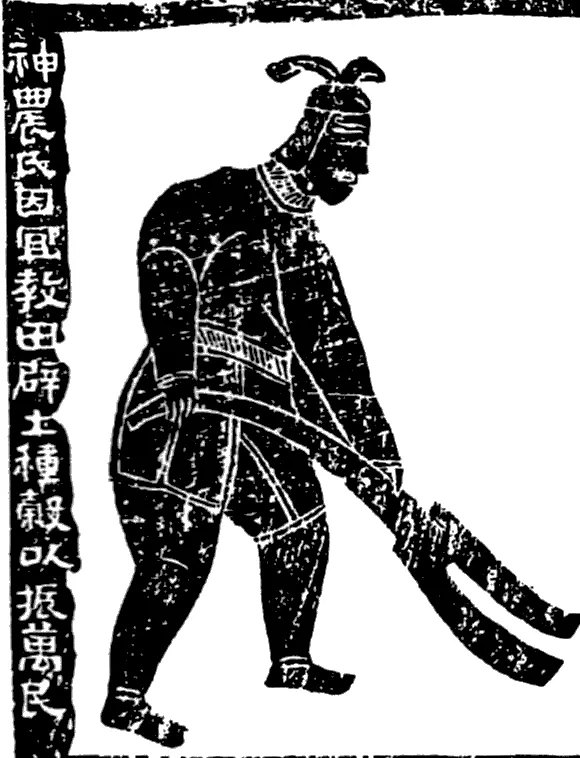
Emperor Shennong, the legendary “Divine Farmer” 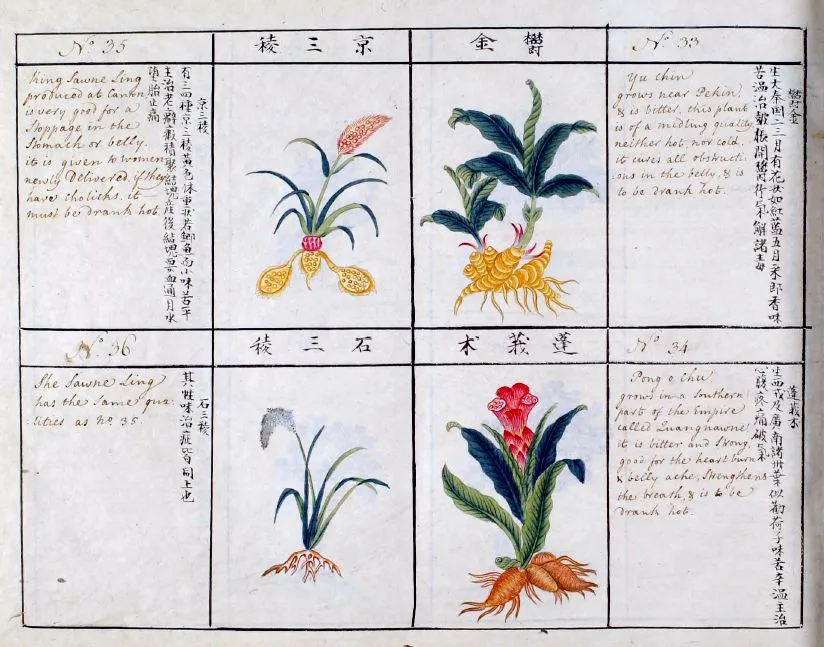
Li Shizhen’s Bencao Gangmu (1578) Ancient origins & the first medicine
Cannabis is one of humanity’s oldest companion plants. Domesticated in East Asia near the Tibetan plateau, hemp gave Neolithic peoples rope, cloth, food, and medicine, the last of these recorded early in the Chinese materia medica attributed to the legendary emperor Shennong. By the 2nd century CE the physician Hua Tuo is said to have used a cannabis-infused wine, “mafeisan,” to render patients insensible for surgery. It is among the earliest accounts of anesthesia anywhere.
- Neolithic East Asia: hemp is cultivated for fiber, cord, and seed long before written record.
- The Shennong Bencaojing, China’s foundational herbal, lists cannabis (má) among medicinal plants.
- c. 200 CE: Hua Tuo is credited with “mafeisan,” a cannabis-and-wine anesthetic for surgery.
-
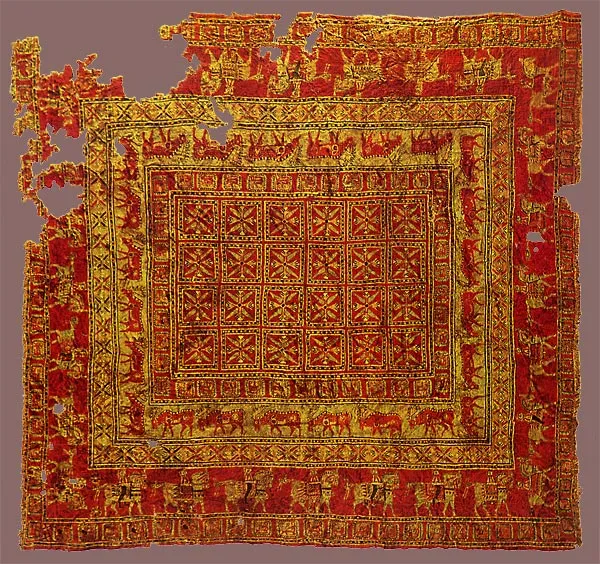
The Pazyryk carpet (~5th c. BCE), from a Scythian kurgan The earliest smoke: the Scythians & the steppe
For most of history we inferred psychoactive use from texts, but Central Asia gives us the physical proof. At the Yanghai tombs in today’s Xinjiang, a man was buried with nearly a kilogram of cannabis; at the Jirzankal cemetery in the Pamirs, wooden braziers hold charred cannabis with elevated THC, the clearest early evidence of burning the plant for its effects. The Greek historian Herodotus described the nomadic Scythians inhaling its vapor in small tents, “howling with pleasure,” a rite of mourning later corroborated by the frozen Pazyryk burials.
- Yanghai tombs (Xinjiang): a man buried ~2,500 years ago with ~800 g of cannabis, suggesting deliberate cultivation.
- Jirzankal (Pamirs, ~500 BCE): braziers with charred, THC-rich cannabis, the earliest clear evidence of ritual burning.
- Herodotus (c. 440 BCE) describes Scythian vapor-tents; the frozen Pazyryk kurgans confirm the practice.
Sources Entheogenic use of cannabis · Jirzankal braziers (Science Advances, 2019)
-
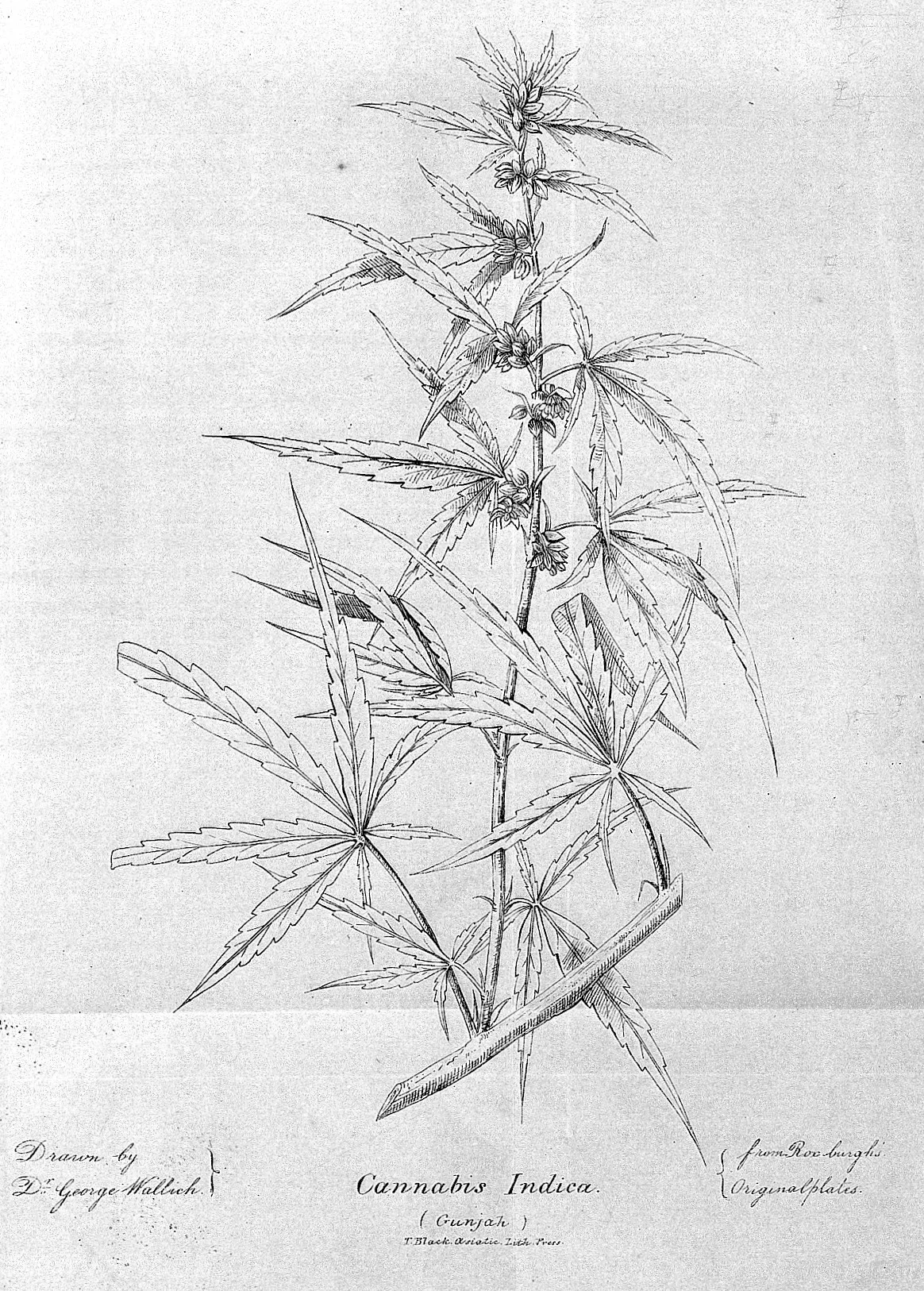
Cannabis indica (“Gunjah”), Wellcome Collection 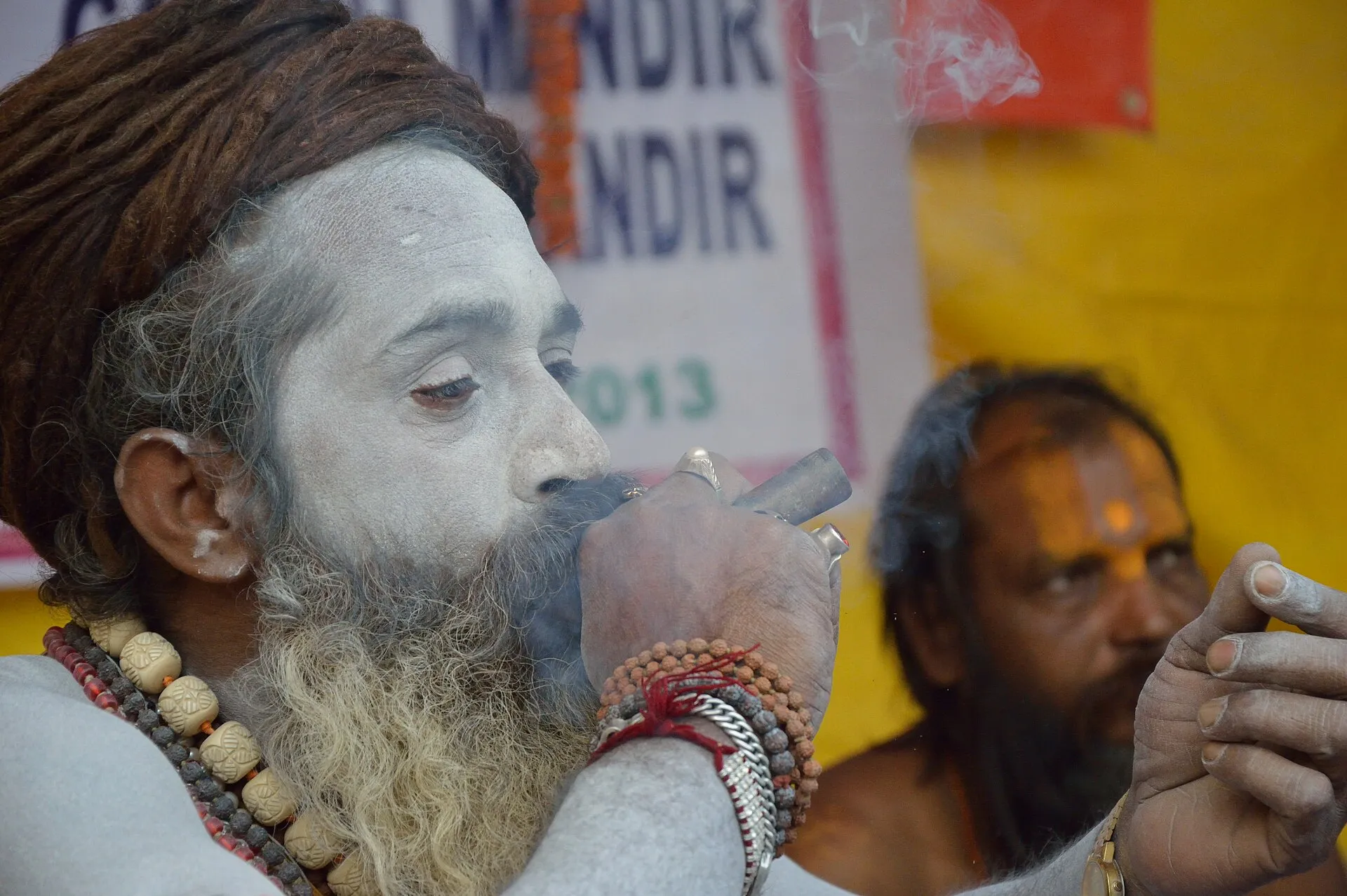
A Naga sadhu at the Gangasagar Fair, Kolkata (2013). Photo: Biswarup Ganguly 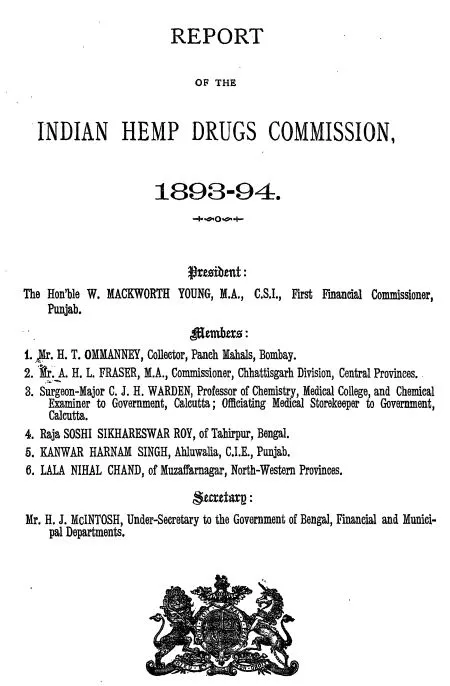
The 3,000-page Indian Hemp Drugs Commission report (1894) India & the sacred plant
In South Asia, cannabis became woven into faith and folk medicine. The Atharvaveda names bhang among sacred plants; Ayurvedic physicians used it for pain, sleep, and digestion; and bhang, ganja, and charas still appear in the rites of Holi and Maha Shivratri. Centuries later, when British colonial authorities feared cannabis was driving madness, the exhaustive Indian Hemp Drugs Commission (1893–94) studied the question and concluded that moderate use caused no significant harm.
- The Atharvaveda (c. 1500–1000 BCE) names bhang among five sacred plants.
- Cannabis enters Ayurvedic practice for pain, appetite, and sleep; bhang persists in Hindu festival ritual.
- 1893–94: the Indian Hemp Drugs Commission, a 3,000-page study, finds moderate use largely harmless.
Sources Indian Hemp Drugs Commission · Cannabis and ancient India (PMC)
-
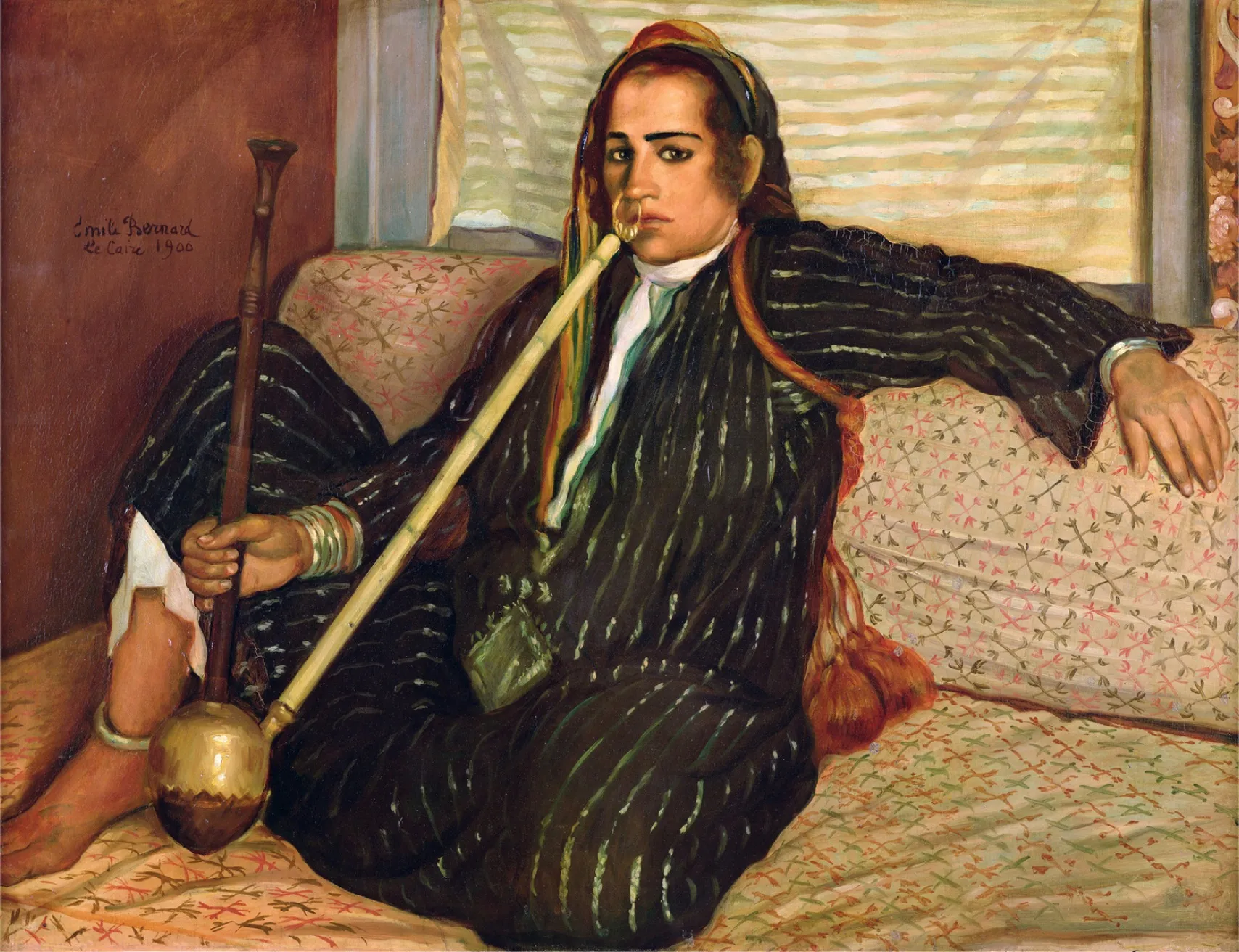
Émile Bernard, “La fumeuse de haschisch” (1900), a European artwork framed as cultural reception 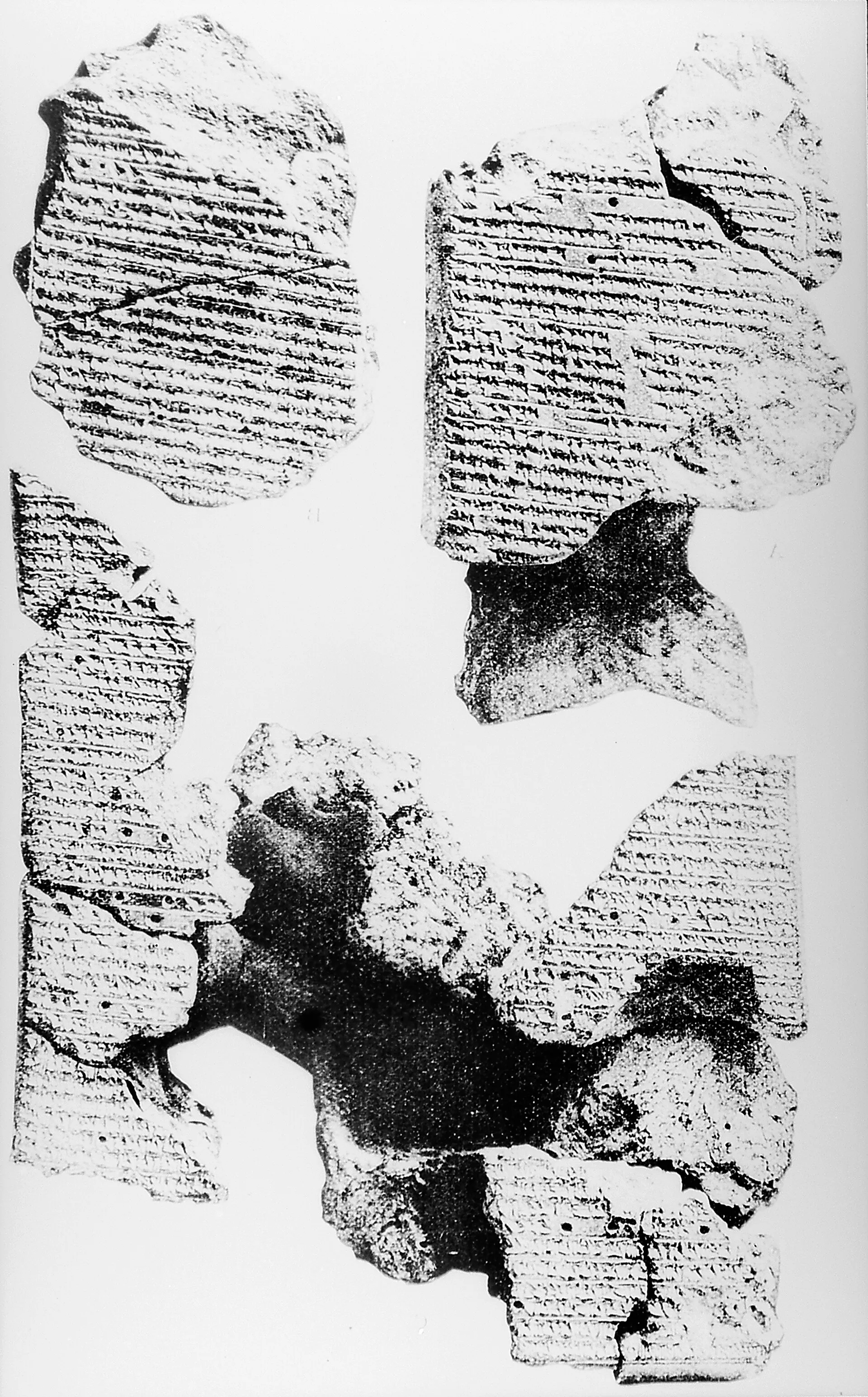
Assyrian medical tablets from Nineveh, the corpus that records qunnabu From Assyria to the Islamic world
The very word “cannabis” has deep roots: in the cuneiform libraries of Assyria the plant appears as qunnabu, used as incense and remedy. In the medieval Islamic world hashish circulated widely as medicine and intoxicant, debated by physicians and jurists alike. And across Europe, hemp became indispensable industry: the rope and sails of navies, and the paper on which Gutenberg printed his Bible.
- Assyrian medical tablets (under Esarhaddon, 7th c. BCE) list qunubu / qunnabu, a likely ancestor of “cannabis.”
- The medieval Islamic Golden Age: hashish spreads as medicine and intoxicant, debated by physicians and jurists.
- Medieval Europe relies on hemp for rope, sails, and paper, including early printed books.
Sources Cannabis in Arabic medicine (PMC) · Mechoulam, The Pharmacohistory of Cannabis sativa
-
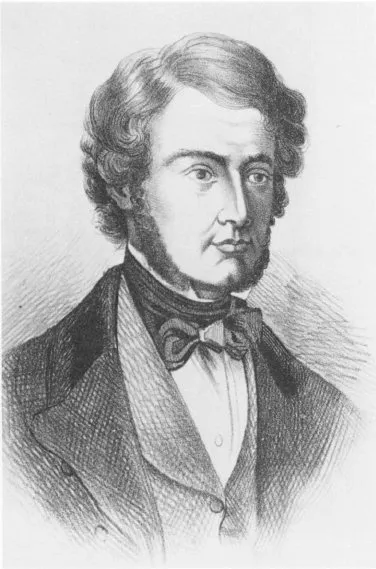
William Brooke O’Shaughnessy, who reintroduced cannabis to Western medicine 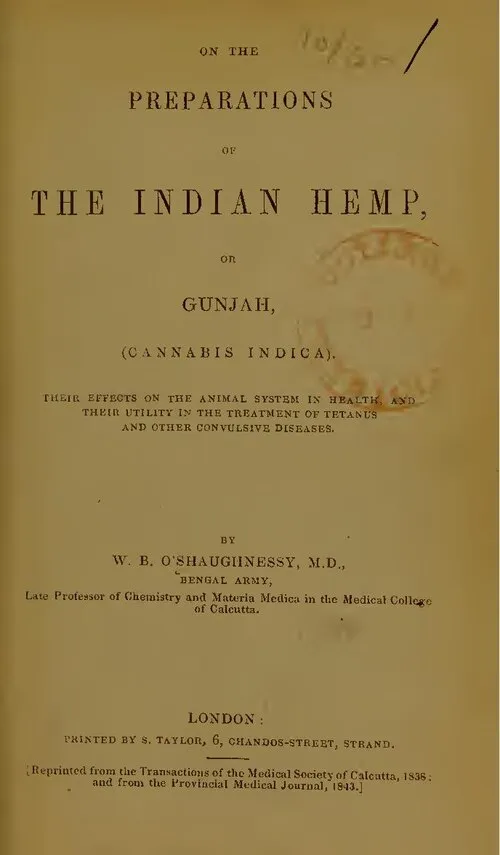
The founding paper of Western medical cannabis (1839) Cannabis enters Western medicine
In 1839 a young Irish physician in colonial Calcutta, William Brooke O’Shaughnessy, studied “Indian hemp” and carried it back to a skeptical West, publishing trials of cannabis for the spasms of tetanus and rabies, for rheumatism, and for convulsions. His work opened the door: within a decade cannabis tinctures filled apothecaries, and in 1850 cannabis entered the United States Pharmacopeia as a recognized medicine.
- 1839: O’Shaughnessy publishes “On the Preparations of the Indian Hemp,” introducing cannabis to Western medicine.
- The 1840s: standardized cannabis tinctures spread through British and American pharmacies.
- 1850: cannabis is listed in the United States Pharmacopeia.
-
Cannabis sativa, from Köhler’s Medizinal-Pflanzen (1887) 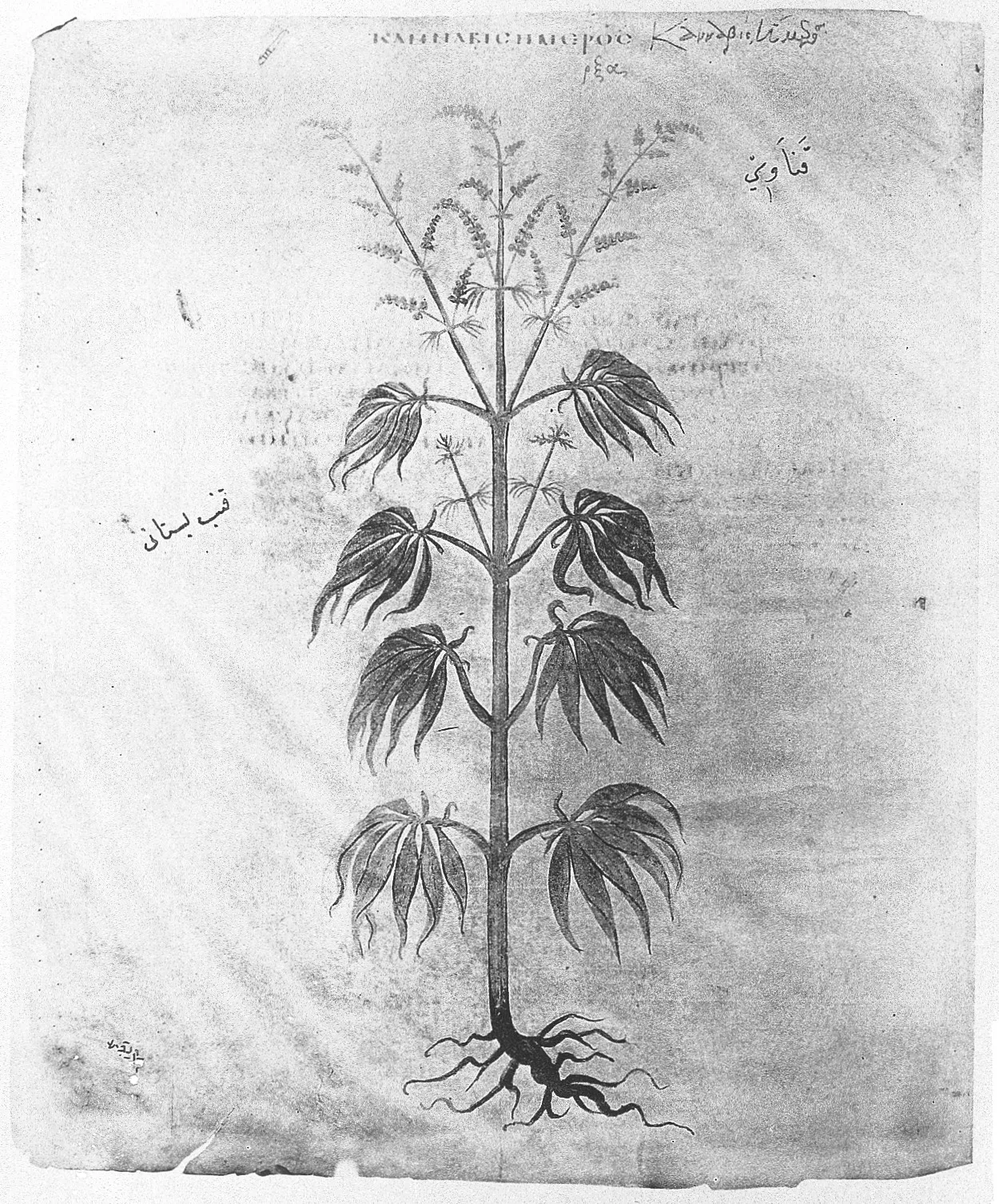
Cannabis indica pharmacognosy plate, Wellcome Collection 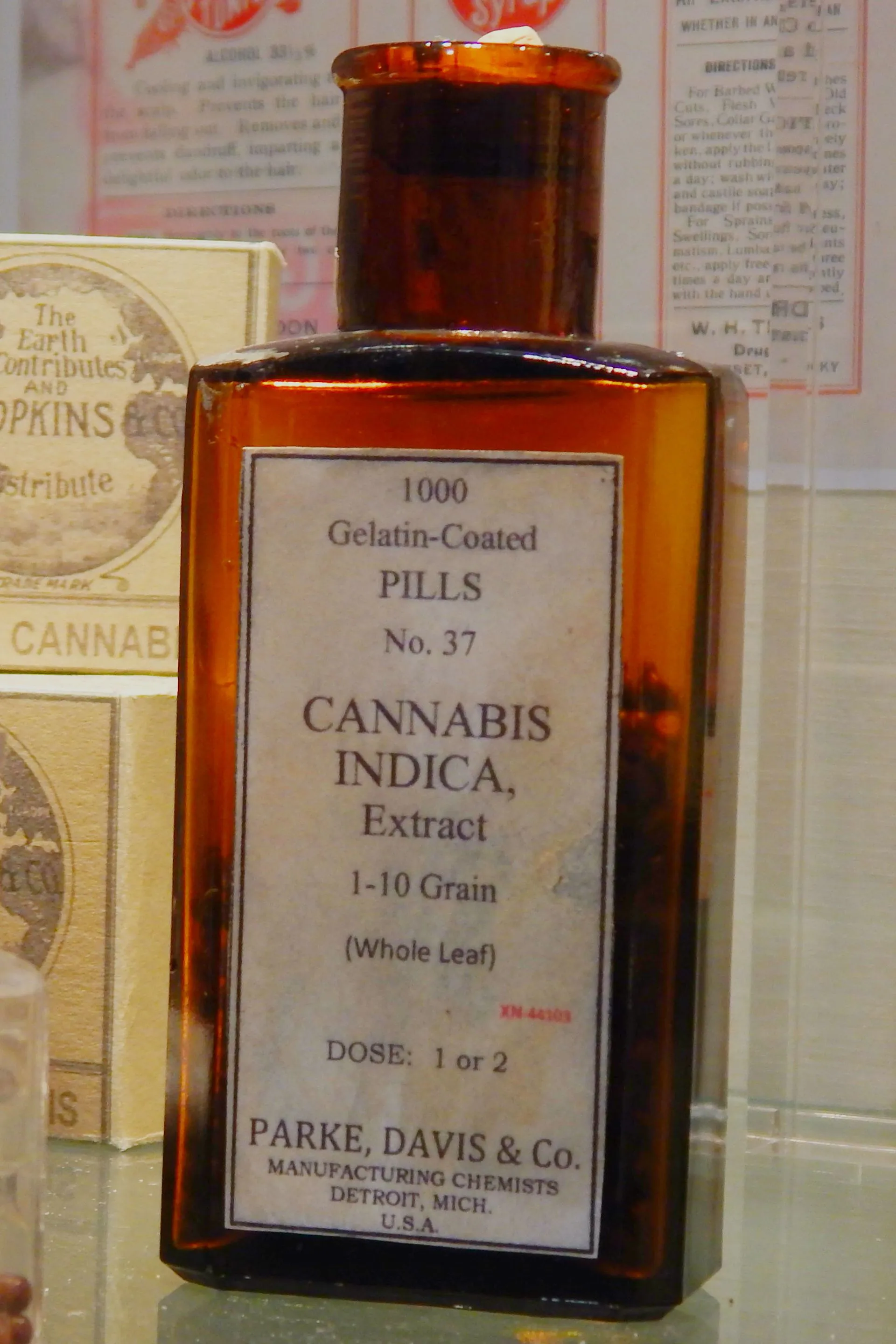
Parke, Davis & Co. cannabis pills. Photo: LordToran, Hash Marihuana & Hemp Museum 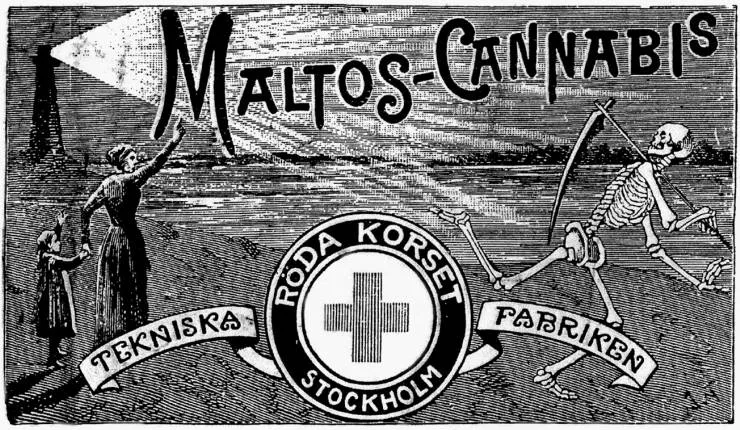
A Maltos-Cannabis tonic advertisement, Stockholm (1890s) The Victorian wonder-drug
For half a century, cannabis was simply mainstream medicine. In Paris, the writers of the “Club des Hashischins” (Baudelaire, Gautier among them) experimented under the eye of the psychiatrist Moreau de Tours. In London, Queen Victoria’s physician Sir John Russell Reynolds prescribed it for menstrual cramps, calling it “one of the most valuable medicines we possess.” Parke-Davis, Eli Lilly, and Squibb sold standardized extracts, and in 1887 Köhler’s great botanical plate fixed the plant in the medical imagination.
- 1840s: the Paris “Club des Hashischins” brings cannabis into European literary and psychiatric circles.
- Sir J. R. Reynolds prescribes cannabis to Queen Victoria’s court; US firms sell standardized tinctures.
- 1887: Köhler’s Medizinal-Pflanzen publishes the definitive 19th-century cannabis botanical plate.
Sources Medicinal cannabis: history & pharmacology (PMC) · Cannabis in Western medicine (PMC)
-
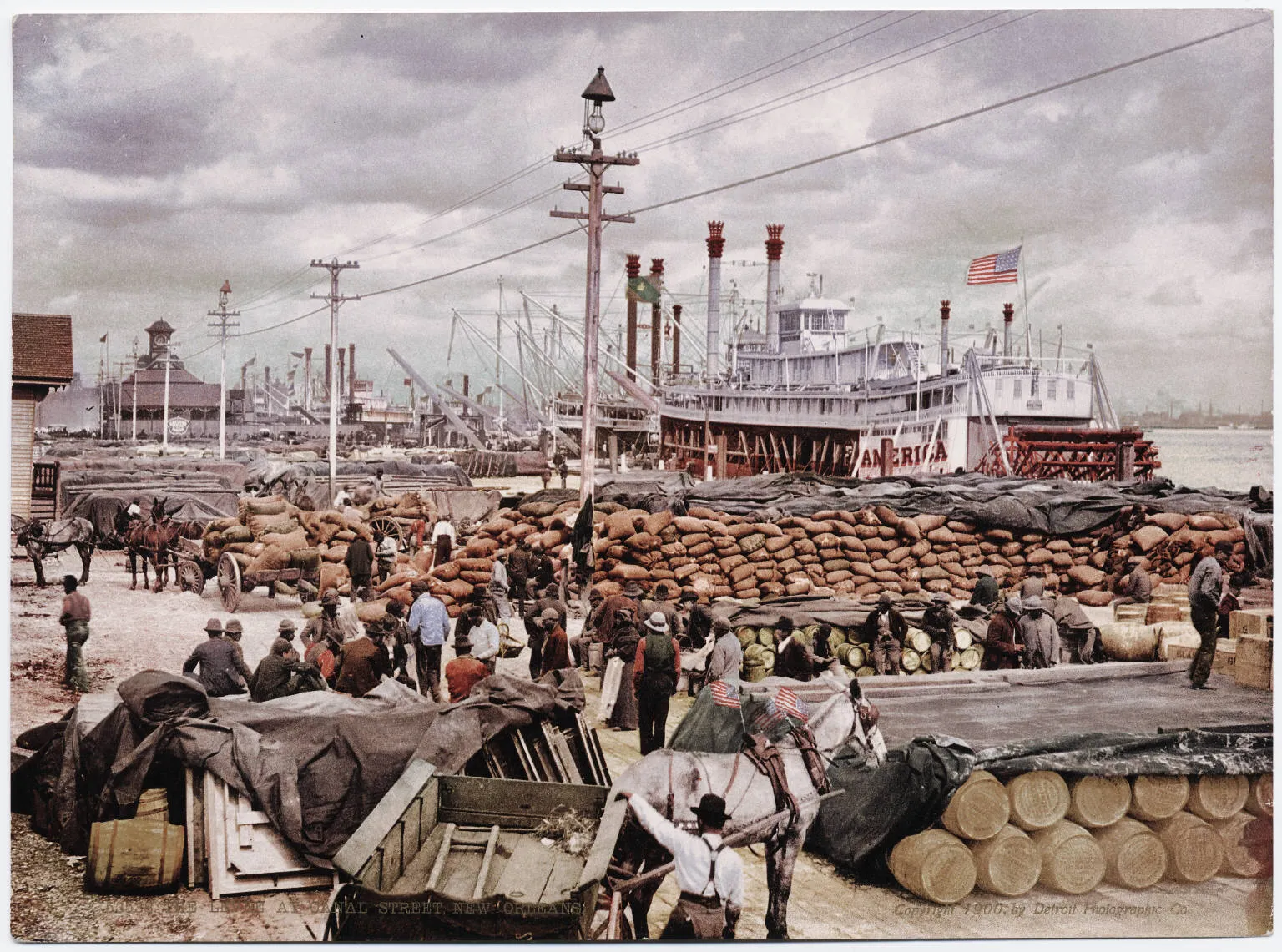
The levee at Canal Street, New Orleans (Detroit Photographic Co., c. 1900) 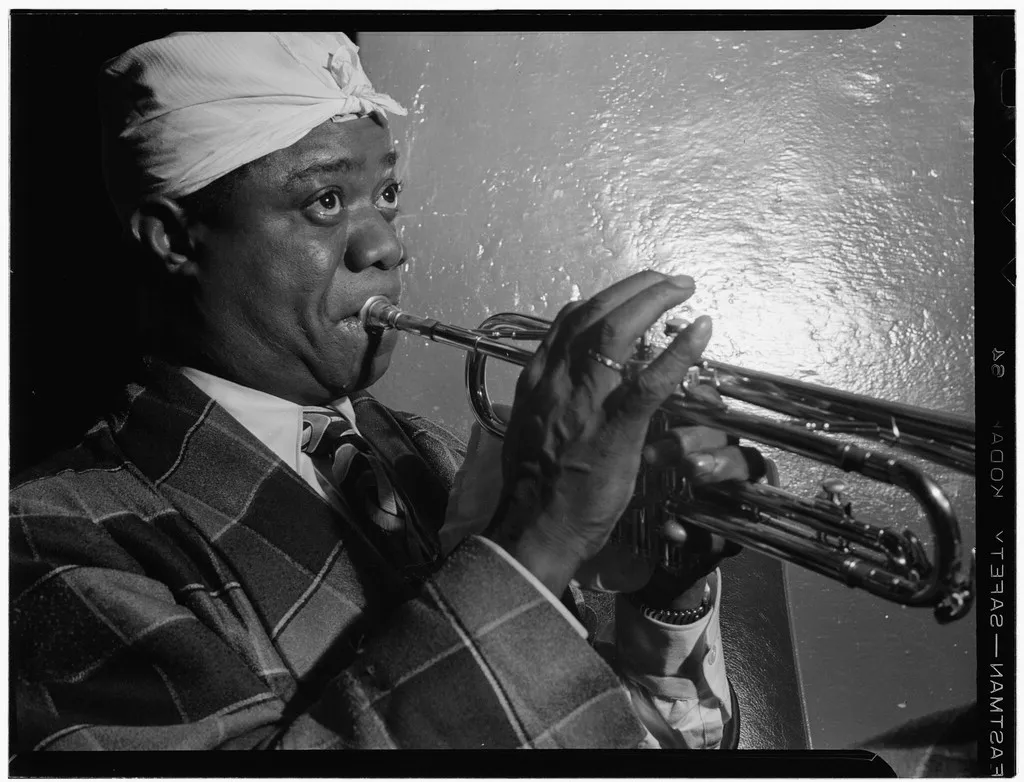
Louis Armstrong. Photo: William P. Gottlieb (1946), Library of Congress The Southern doorway: jazz, muggles & the first panic
Recreational marijuana smoking in America is usually traced to the docks of New Orleans in the early 1900s, a riverfront so busy that the historian Ernest Abel called the city “the Marseilles of America.” In Storyville dance halls it crossed into the jazz world under the name “muggles,” and smokers became “muggleheads.” The South also built prohibition’s first template: New Orleans banned possession and sale in 1923, Louisiana followed statewide in 1924, and the city’s sensational press coverage of a “marijuana menace” supplied the drug-crazed crime narrative that Washington would later make national. The musicians answered in their own way. In 1928, Louis Armstrong, who preferred cannabis to alcohol all his life, recorded a blues masterpiece and simply named it “Muggles.”
- May 29, 1923: the New Orleans city council prohibits possession and sale of marijuana, punishable by up to a $25 fine and thirty days in jail.
- July 1, 1924: Gov. Henry L. Fuqua signs Louisiana’s statewide prohibition after unanimous passage in the legislature.
- 1926: the New Orleans Item and Morning Tribune run a sensational series alleging marijuana had infiltrated the city’s schools.
- Dec 7, 1928: Louis Armstrong records “Muggles” in Chicago with Earl Hines (OKeh matrix W402200).
- 1931: New Orleans physician A. E. Fossier publishes “The Marihuana Menace,” reviving the old Assassin legend for medical readers.
Louis Armstrong
Armstrong first tried gage, his affectionate name for cannabis, in Chicago in 1927, and by most accounts smoked it nearly every day for the rest of his life. In manuscripts now held by the Louis Armstrong House Museum he called it an assistant and a friend, “a thousand times better than whiskey.” In November 1930 he and drummer Vic Berton were arrested sharing a joint outside Culver City’s Cotton Club between sets; the following March, Armstrong spent nine days in jail, walked out with a suspended sentence, and went back to the bandstand. Late in life he hoped to write a whole book about it.
Sources Rathge, “Mapping the Muggleheads,” Southern Spaces (Emory) · Abel, “The Jazz Era,” Marihuana: The First Twelve Thousand Years · “Muggles” (OKeh W402200), UCSB Discography · Louis Armstrong House Museum · Armstrong’s 1930 Culver City arrest (LA Weekly)
-
United States · 1936
A new word arrived: “marihuana.”
The fear was manufactured.
The prison sentences were real.
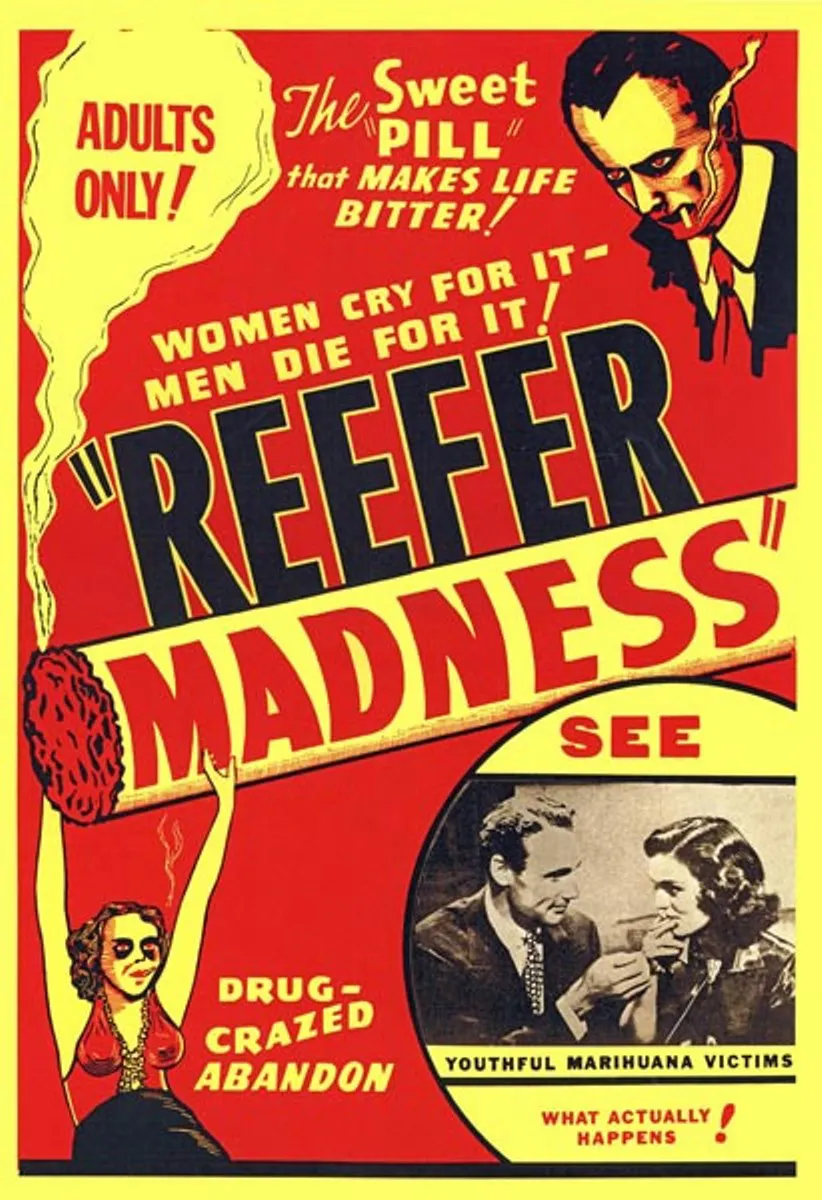
Reefer Madness theatrical poster (1936) · source · Public domain (US, published without notice)
-
Reefer Madness theatrical poster (1936): anti-cannabis propaganda 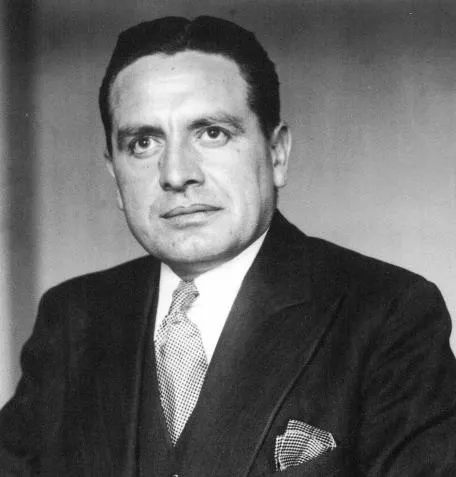
Harry J. Anslinger, first FBN commissioner (1931) 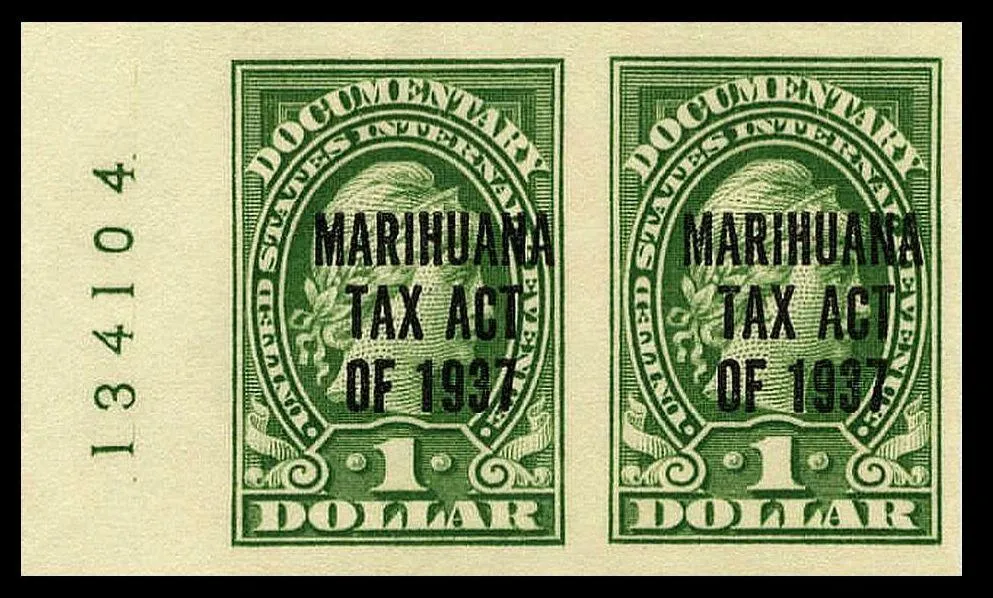
The 1937 federal marihuana revenue stamp 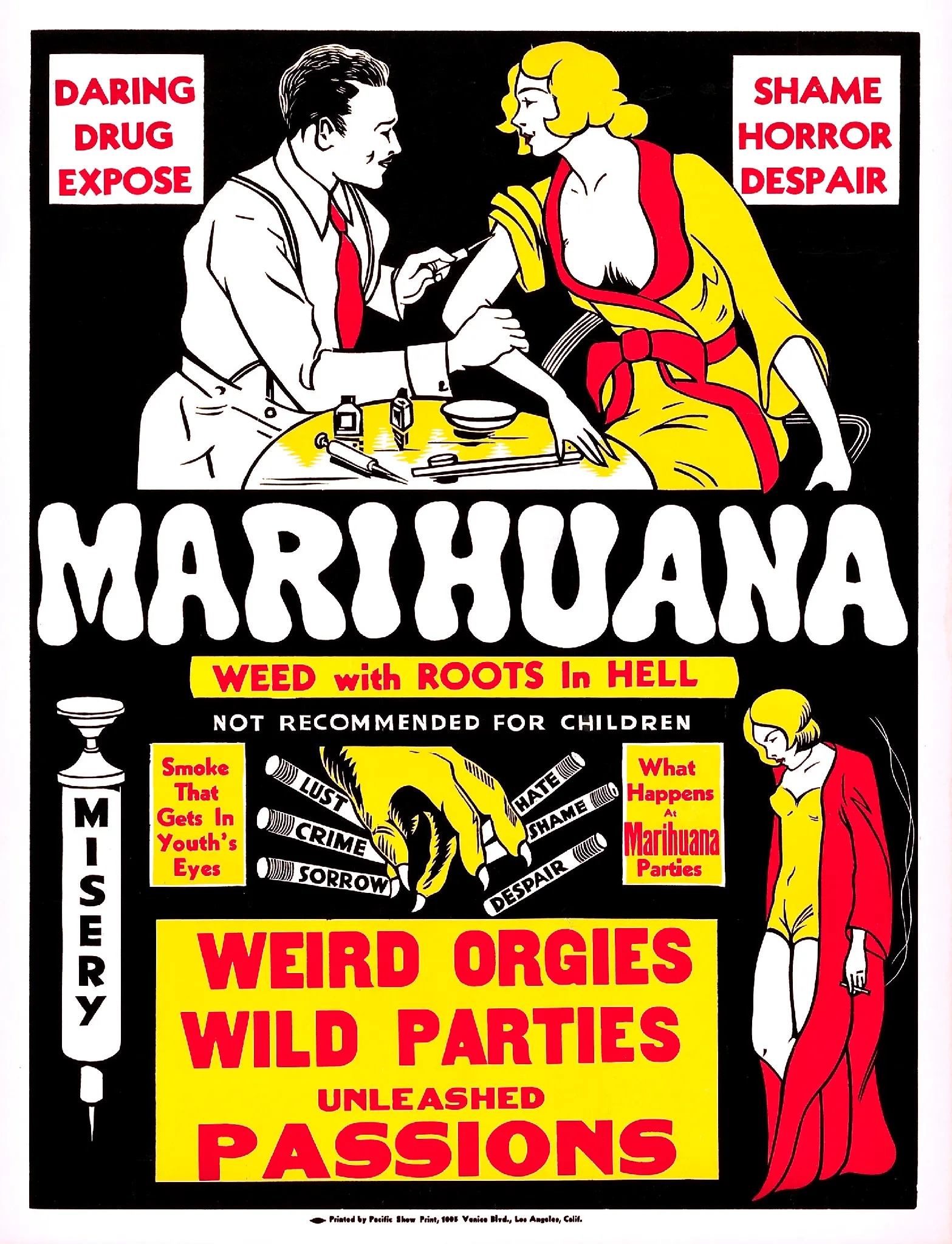
Poster for “Marihuana” (1936), peak pre-Tax Act propaganda The road to prohibition
A respected medicine was criminalized, driven not by science but by racial fear. As Mexican immigration rose, campaigners pushed the foreign-sounding word “marihuana” and tied the drug to Black and Mexican communities. Harry Anslinger, first head of the Federal Bureau of Narcotics, amplified lurid “Gore File” stories from the Hearst press. In 1937 Congress passed the Marihuana Tax Act after barely two pages of debate, over the lone objection of the American Medical Association’s Dr. William Woodward.
- 1930: the Federal Bureau of Narcotics is created; Harry J. Anslinger becomes its first commissioner.
- 1936: the exploitation film Reefer Madness dramatizes wild dangers; it later became public domain.
- Aug 1937: the Marihuana Tax Act passes with no roll-call vote; the AMA’s Dr. Woodward is the only witness against it.
- Myth vs. fact: Anslinger did not produce Reefer Madness; its producer sought his endorsement in 1938, after the Act had already passed (Hall, Addiction, 2026).
Dr. William C. Woodward
When Congress weighed the Marihuana Tax Act in 1937, the American Medical Association sent one man to object. Dr. William C. Woodward, a physician and lawyer serving as the AMA’s legislative counsel, told the House committee that the case for prohibition rested on newspaper stories rather than competent primary evidence. Pressed by congressmen insisting the habit was spreading, he answered flatly that there was no evidence of that. His warning survives in the record: “future investigation may show that there are substantial medical uses for Cannabis.” Congress passed the act anyway.
Sources Marihuana Tax Act of 1937 · Anslinger & Reefer Madness (Addiction, 2026) · Racial myths of the cannabis war (BU Law Review)
-
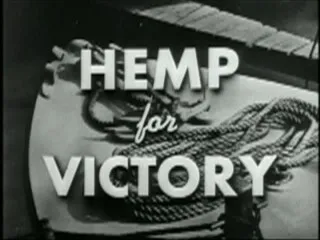
Washington, D.C. · 1942
In 1942, cannabis left the U.S. Pharmacopeia after nearly a century.
That same year, Washington begged farmers to grow hemp for the war.
The contradiction would last another eighty years.
Still from the USDA film “Hemp for Victory” (1942) · source · Public domain (US government work)
-
Still from the USDA film “Hemp for Victory” (1942) 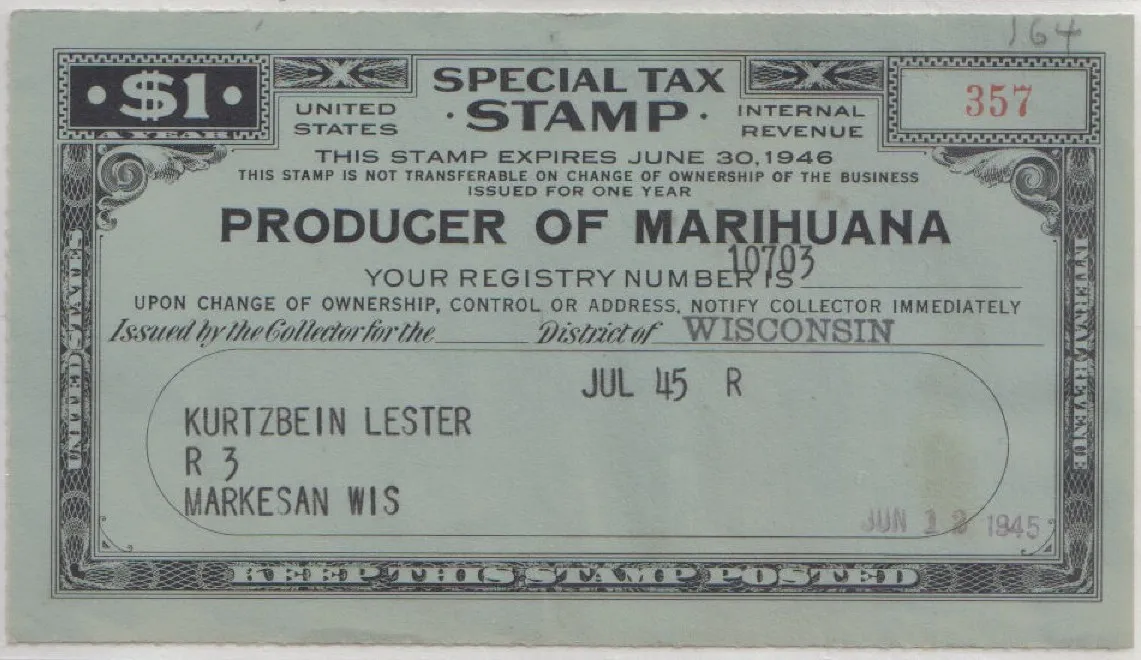
A U.S. government cannabis-cultivation image 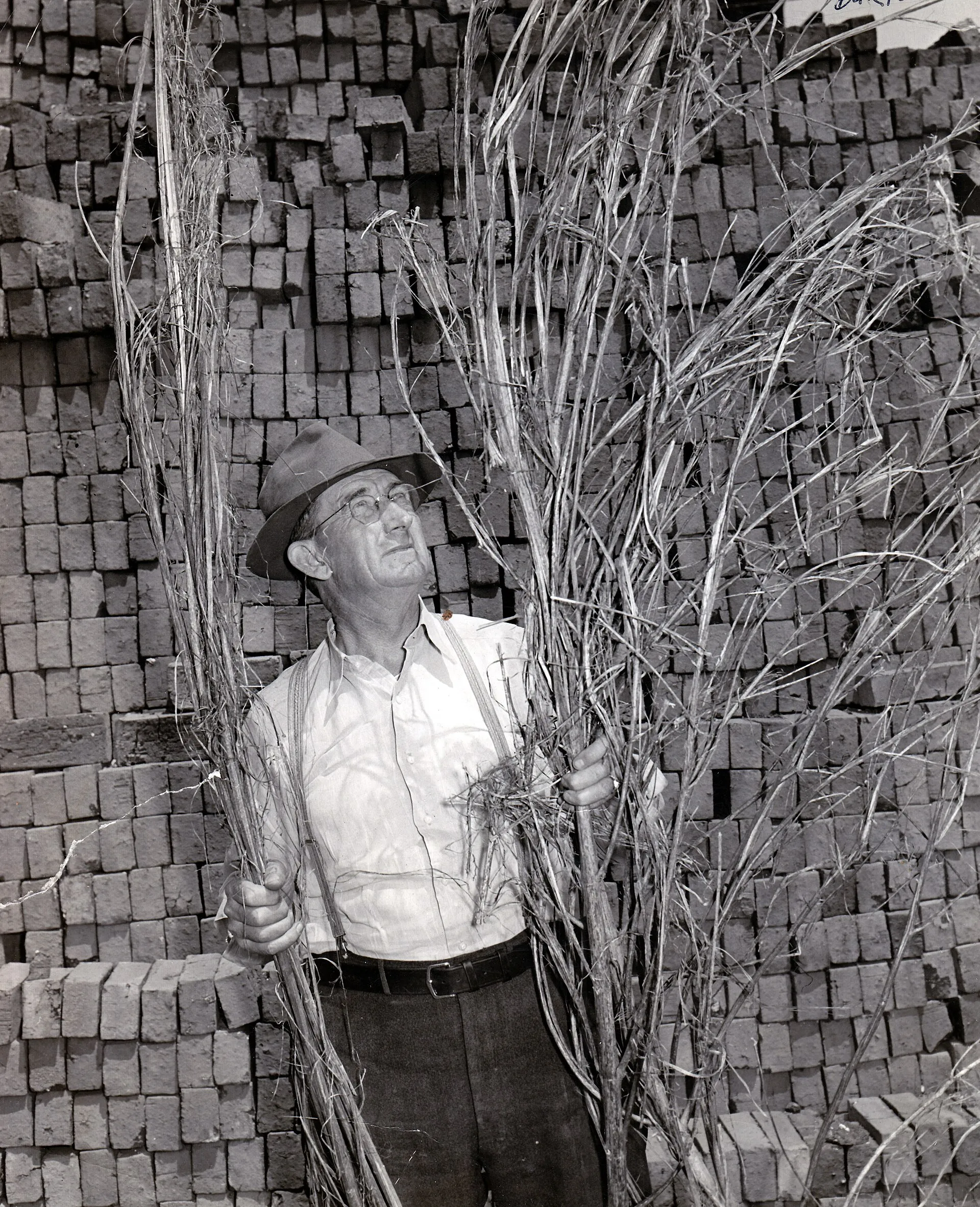
Kentucky hemp farmer Joe “Daddy Burt” Burton, USDA War Board (1942). Photo: Bobeocean A wartime exception & the long prohibition
The contradictions ran deep. In 1942 cannabis was dropped from the U.S. Pharmacopeia after nearly a century. That same year, with Pacific fiber cut off by war, the very same USDA released “Hemp for Victory,” urging farmers to grow hemp for the Navy’s rope. The 1944 La Guardia Report found the panic baseless; Anslinger dismissed it as “unscientific.” Through the Beat era, Allen Ginsberg marched with a sign reading “Pot Is Fun,” even as penalties climbed.
- Nov 1942: cannabis is removed from the U.S. Pharmacopeia, ending nearly a century of recognized medical use.
- 1942: the USDA film “Hemp for Victory” asks farmers to grow hemp for the war effort.
- 1944: the La Guardia Report finds cannabis not addictive and not a driver of crime; Anslinger attacks it.
- 1964: poet Allen Ginsberg helps organize LeMar and marches with a “Pot Is Fun” sign; the early reform movement stirs.
Joe “Daddy Burt” Burton
Joe Burton, called Daddy Burt, was raised in Garrard and Jessamine counties in central Kentucky, where he farmed hemp and tobacco while serving as Nicholasville’s police judge and the county jailer. In the 1930s the governor named him a hemp farming specialist to teach other growers. When the war cut off Asian fiber and the USDA launched Hemp for Victory, Burton, with all five sons in the military, expanded the family fields into one of the country’s largest hemp crops; in 1942 the USDA War Board honored his effort. His great-grandson later revived the name with a Lexington hemp company.
Sources Hemp for Victory · La Guardia Committee report
-
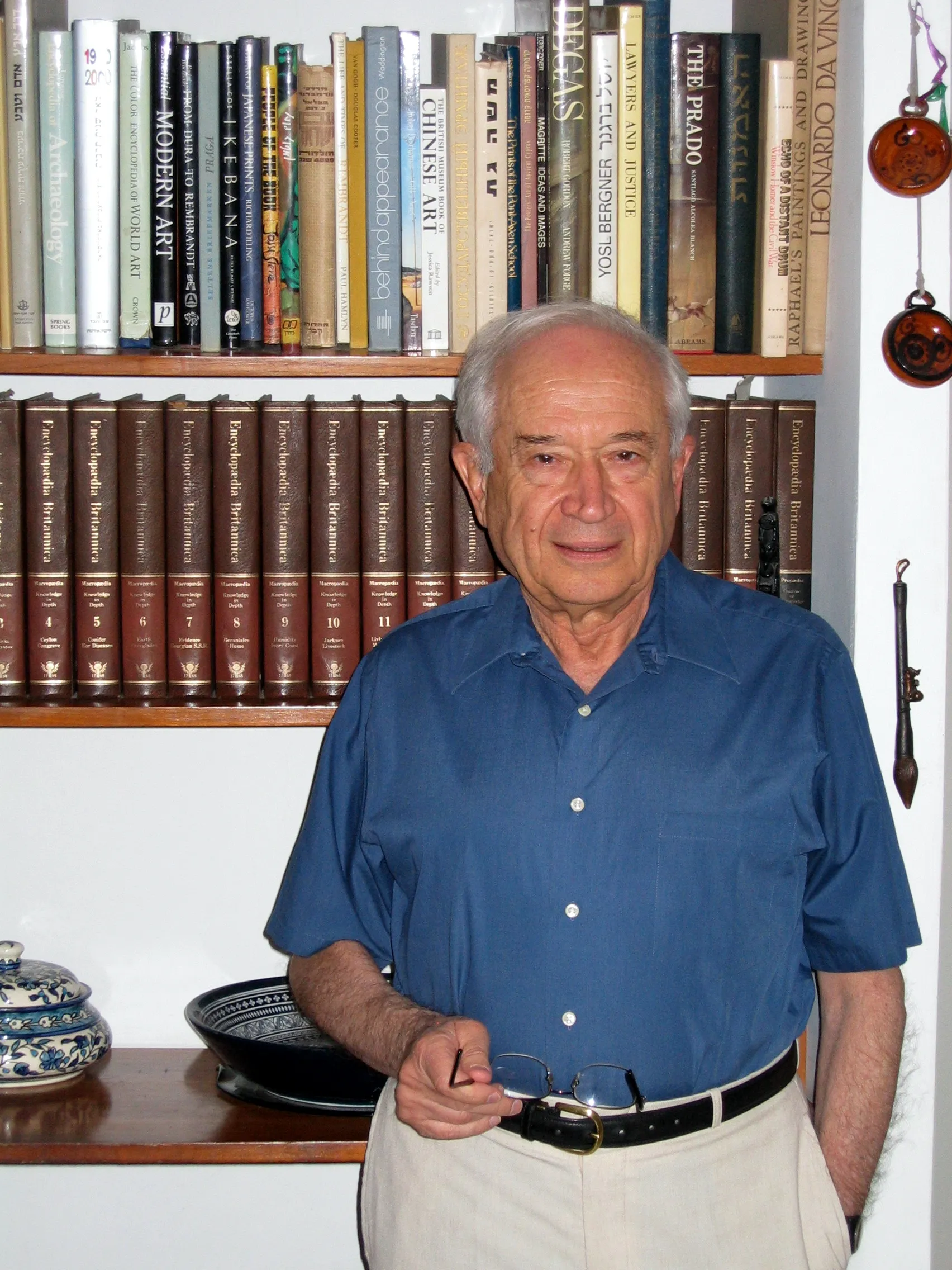
Prof. Raphael Mechoulam, who isolated THC and discovered anandamide 
Delta-9-THC, the molecule Mechoulam mapped in 1964 The science: decoding the plant, and the body
Even as prohibition hardened, the science quietly began. In 1964 the Israeli chemist Raphael Mechoulam isolated and mapped delta-9-THC. The deeper revelation came later: in 1992 his team discovered anandamide, named from the Sanskrit for “bliss,” the first endocannabinoid the body makes itself. Alongside the CB1 (1988) and CB2 (1993) receptors, this revealed the endocannabinoid system, a signaling network for pain, appetite, mood, and memory. Cannabis works, it turned out, because our own bodies run on a related chemistry.
- 1964: Mechoulam and Gaoni isolate and describe delta-9-THC, the plant’s main psychoactive compound.
- 1988–1993: the CB1 and CB2 cannabinoid receptors are identified, then cloned.
- 1992: anandamide, the first endocannabinoid, is discovered, establishing the endocannabinoid system.
Raphael Mechoulam
A Holocaust survivor who emigrated to Israel, Mechoulam reportedly carried 5 kg of police-seized hashish onto a bus to begin his work. He isolated THC in 1964 and, in 1992, discovered anandamide: proof that the human body has its own cannabinoid chemistry. He spent his life insisting cannabis be studied as medicine, not contraband.
Sources Raphael Mechoulam · Endocannabinoid discovery timeline (Project CBD)
-
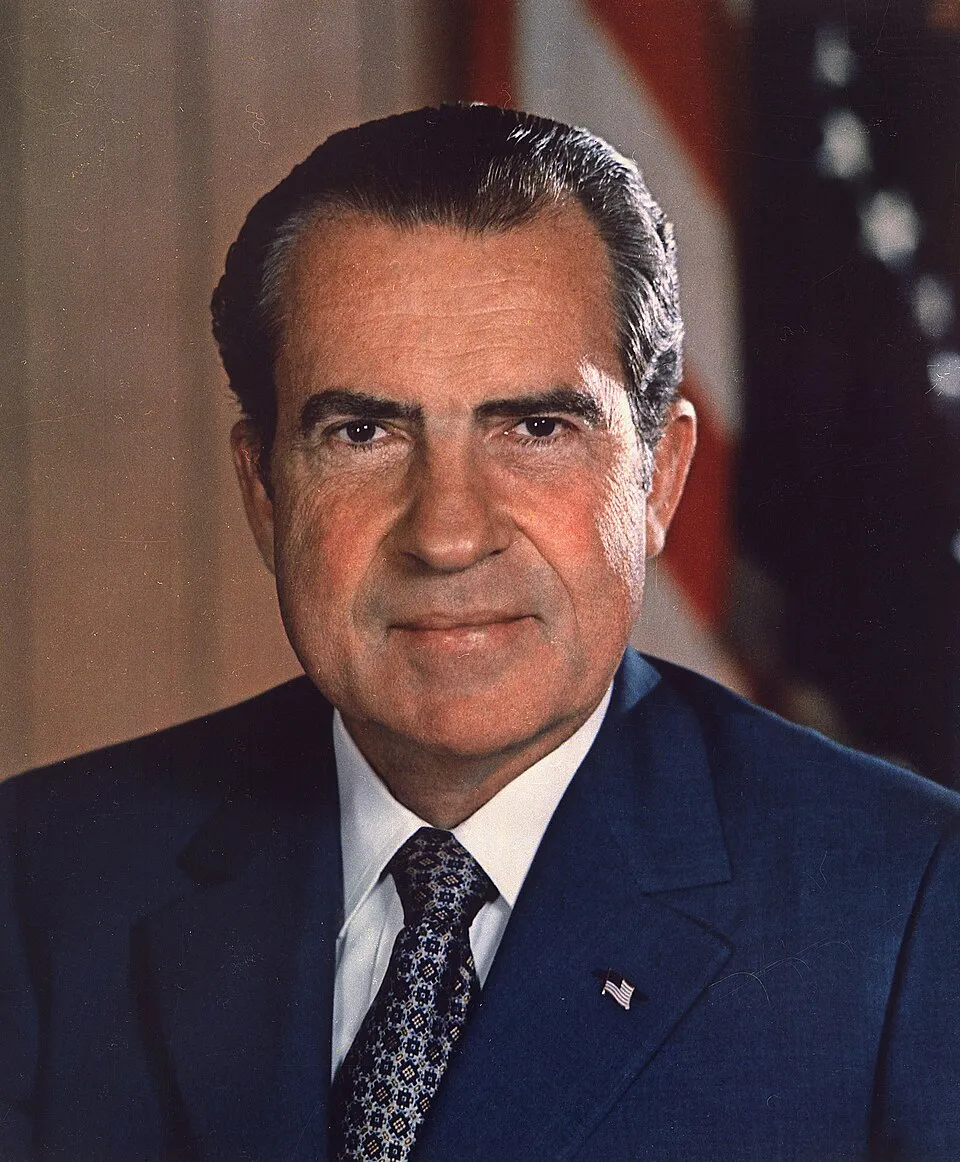
President Richard Nixon, who signed the 1970 Controlled Substances Act 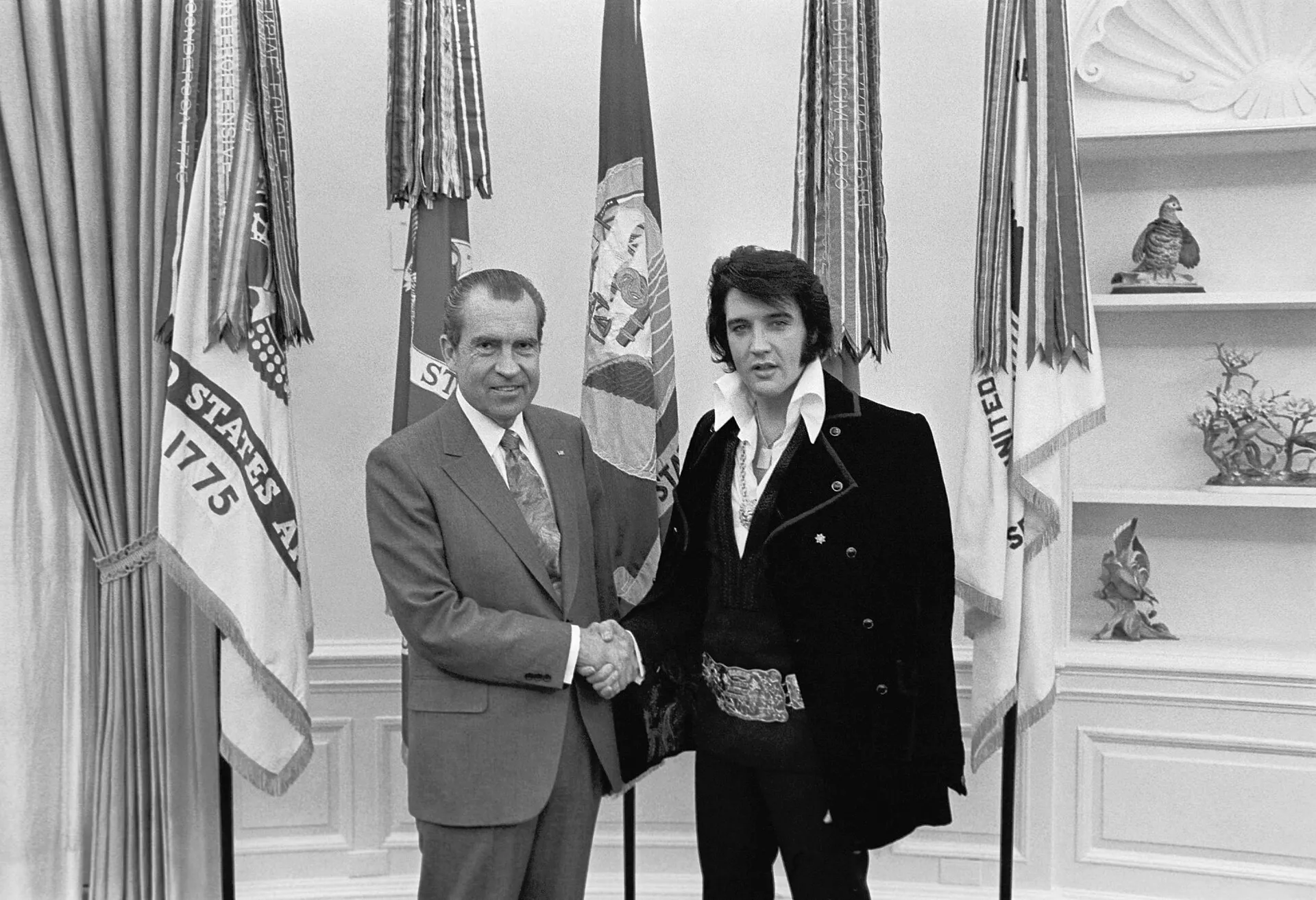
Nixon and Elvis Presley, two months after the CSA. Presley volunteered for the drug war 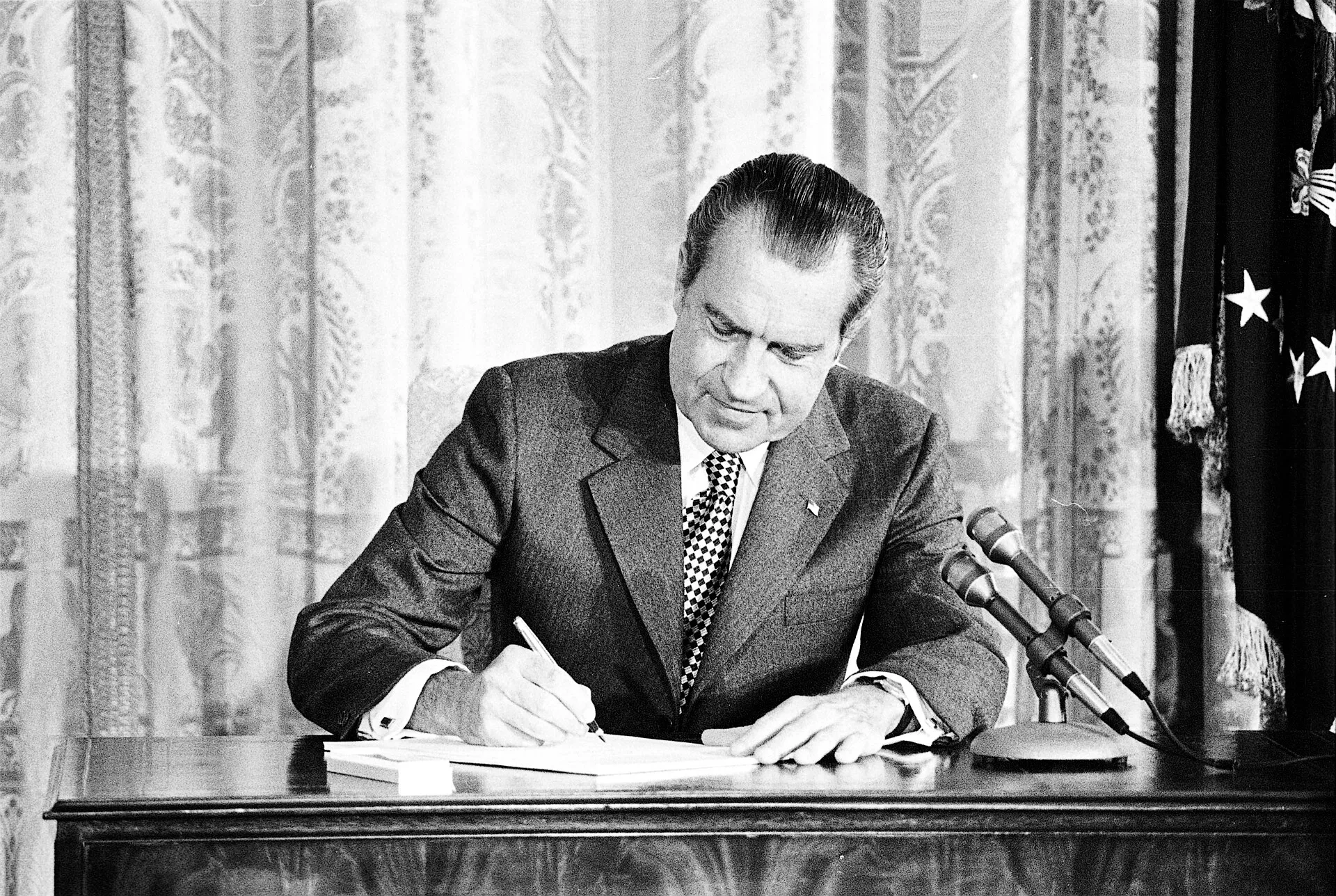
Nixon signs his 1972 drug bill, fifteen months after the CSA 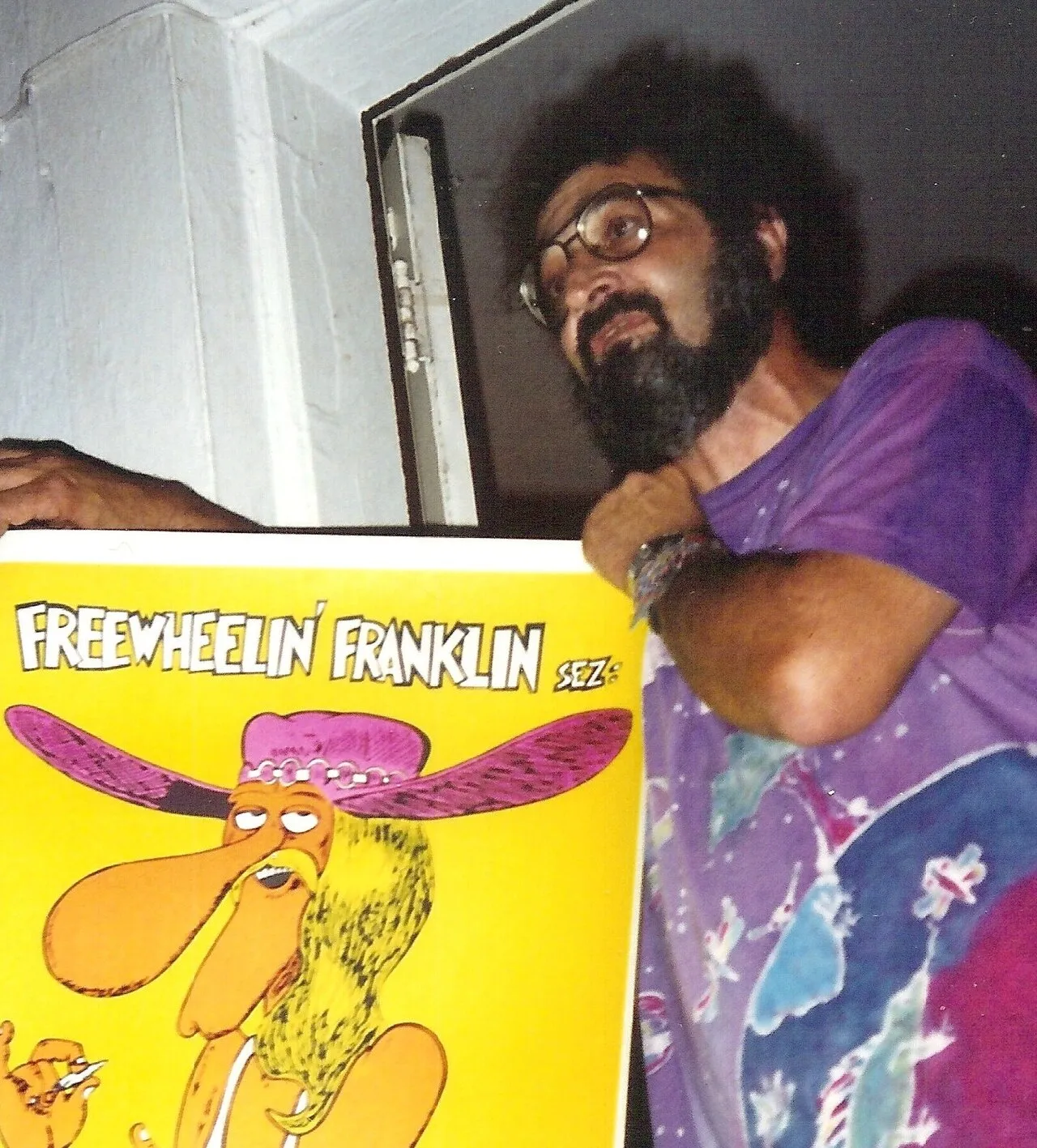
Jack Herer, the activist who answered the drug war. Photo: Carolmooredc (1989) Schedule I & the first push-back
In 1970 the Controlled Substances Act sorted drugs into five schedules and placed cannabis in Schedule I, citing “no currently accepted medical use,” as a supposedly temporary step pending study. The same year, attorney Keith Stroup founded NORML with seed money from the Playboy Foundation. When the government’s own Shafer Commission reported in 1972 that cannabis posed no danger to public safety and urged decriminalization, President Nixon rejected it outright; tapes later showed he’d pressured the panel in advance.
- Oct 27, 1970: Nixon signs the Controlled Substances Act; cannabis is placed in Schedule I, alongside heroin.
- 1970: NORML is founded, becoming the leading voice for reform; 11 states would decriminalize that decade.
- 1972: the Shafer Commission recommends decriminalization, and is rejected outright by the White House.
Jack Herer
An Army veteran who served in Korea, Jack Herer tried cannabis in the early 1970s and turned it into a lifelong crusade. He opened a Los Angeles head shop in 1973 and argued that hemp could be a renewable source of fuel, paper, fiber, and food. His 1985 book, “The Emperor Wears No Clothes,” became the hemp movement’s bible; it also popularized the theory that DuPont, Hearst, and Mellon conspired to ban the plant, a claim later historians have largely not confirmed. He ran for president twice, lent his name to a celebrated strain, and offered $100,000 to anyone who could disprove his book.
Sources Controlled Substances Act · Shafer Commission · Jack Herer
-
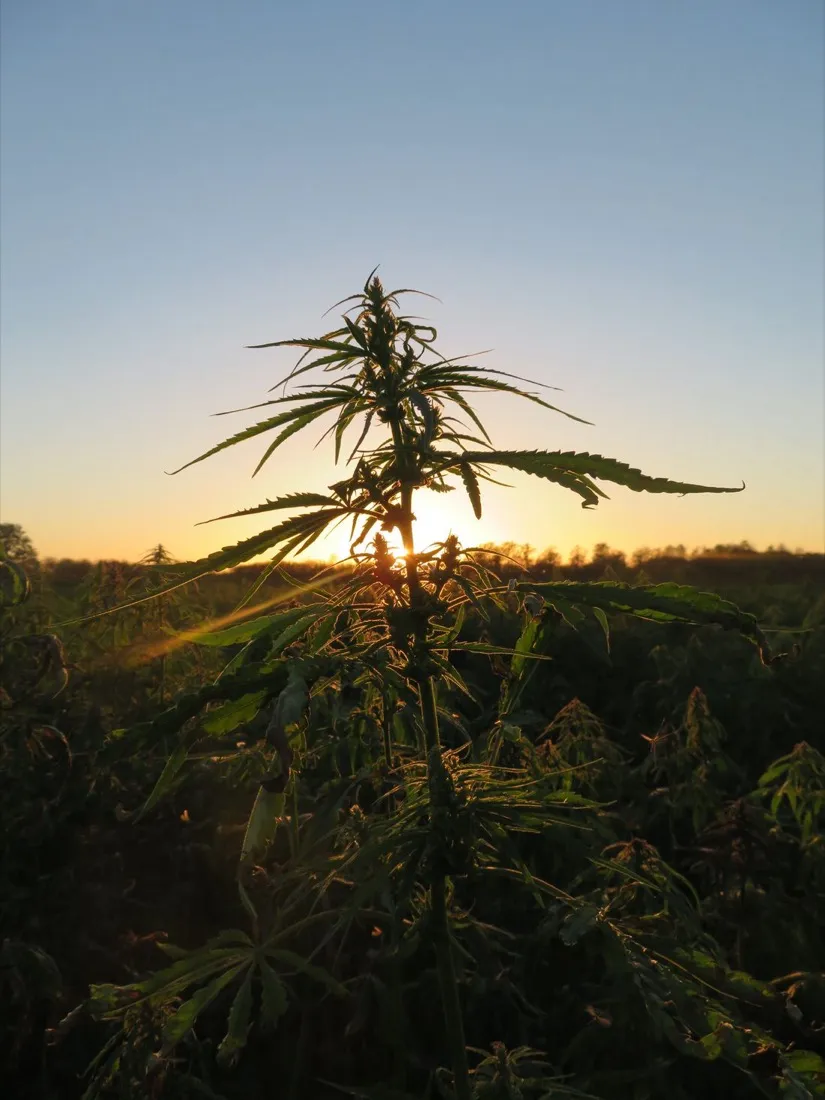
Outdoor cannabis at golden hour 
A Guard eradication hoist over the Mendocino National Forest (2011), the raid form CAMP made famous Kept alive underground
As prohibition hardened, cannabis didn’t vanish. It went underground, kept alive by a generation of clandestine growers. Counterculture “back-to-the-landers” settled the rugged hills of Northern California, Humboldt, Mendocino, and Trinity, the “Emerald Triangle,” onto cheap land left by collapsing timber towns, and perfected sinsemilla: seedless flower far stronger than the imported, seedy “brick weed” of the day. In the rural South and Appalachia, cannabis became a hidden cash crop that picked up where moonshine left off. The government fought back from the air with helicopter eradication raids, which only pushed growers, and the plant’s prized genetics, indoors and overseas to survive.
- Late 1960s–70s: “back-to-the-land” settlers grow cannabis in California’s Emerald Triangle, developing potent sinsemilla.
- 1979 on: the DEA’s Domestic Cannabis Eradication Program flies National Guard helicopters over fields nationwide.
- 1983: California’s CAMP raids coin the name “Emerald Triangle”; Georgia’s strike force pulls up 660,000+ plants “by hand.”
- Underground breeders preserve landrace genetics, later carried to the Netherlands, seeding strains the legal industry still grows.
The Cornbread Mafia
A loose brotherhood of Kentucky farmers grew marijuana across ten states through the 1980s. When federal agents finally broke it up in 1989 (70-plus men, 182 tons), they hit a wall of silence: not one grower informed on another. It remains the largest domestic marijuana-growing ring ever charged.
Sources Drug history: the Emerald Triangle & sinsemilla · AJC: Georgia’s 1983 marijuana strike force · Campaign Against Marijuana Planting (CAMP)
-
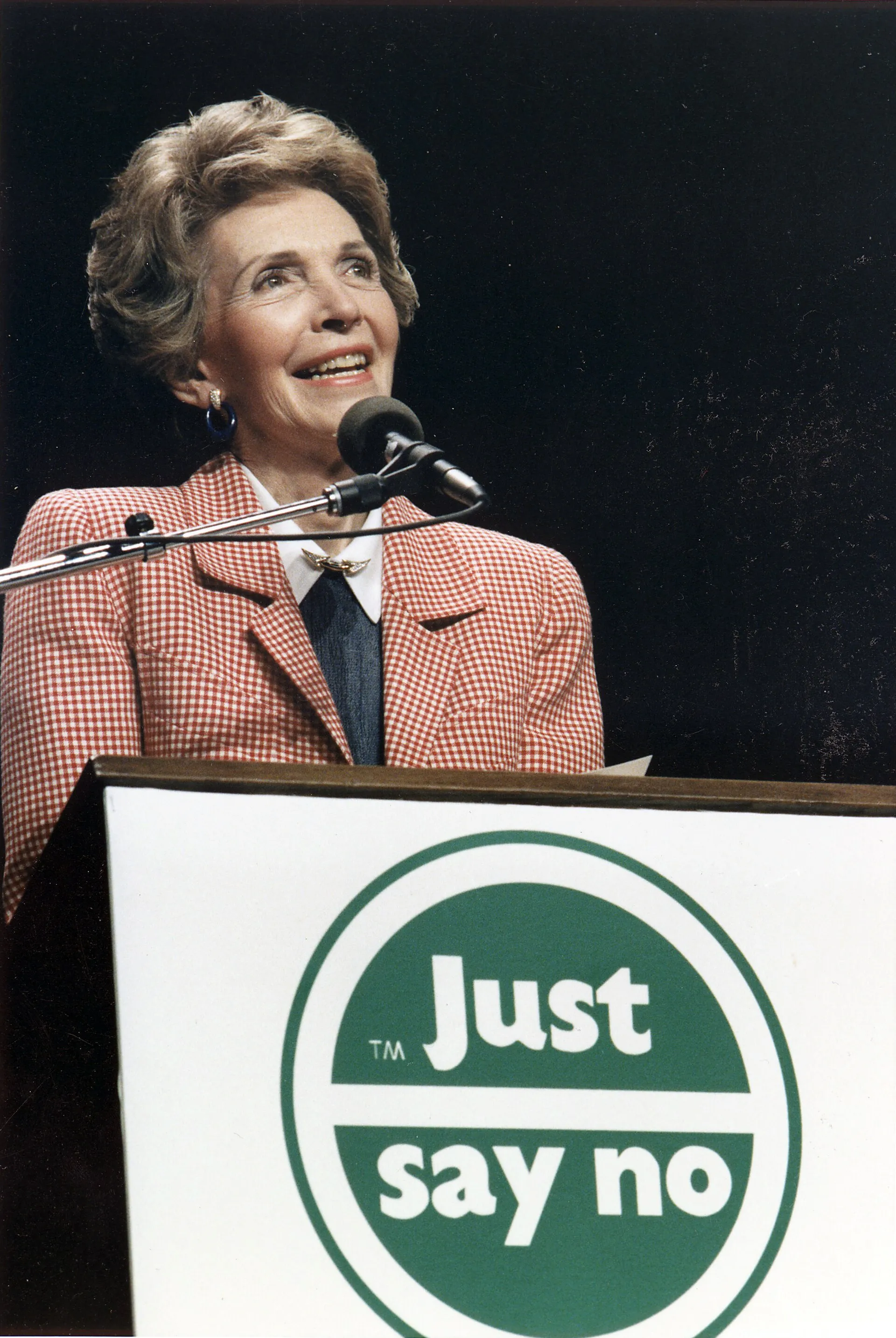
Nancy Reagan at a “Just Say No” rally, Los Angeles (1987) 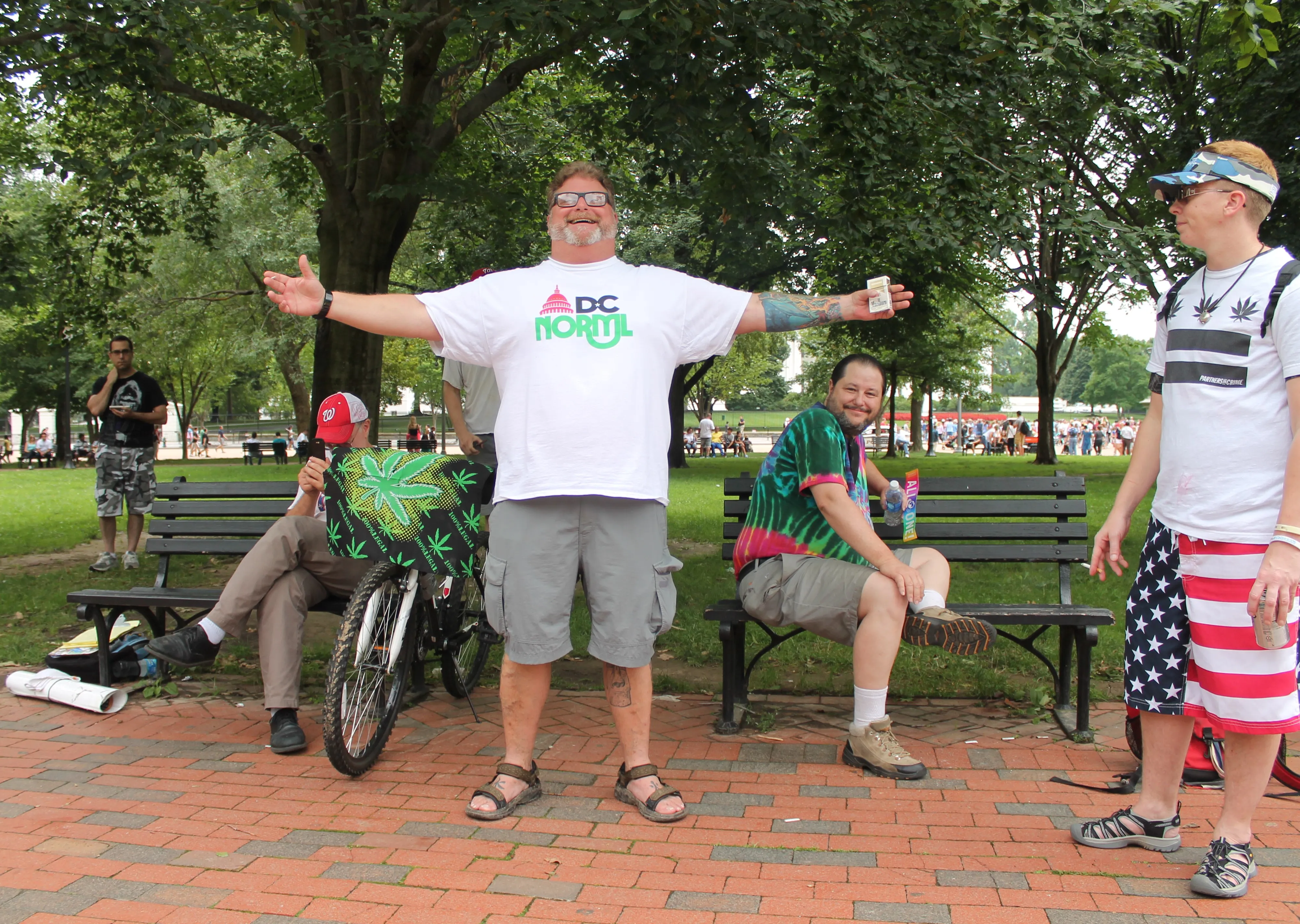
A cannabis-reform “smoke-in” protest, Lafayette Park (2015) Compassion versus the drug war
Two currents ran against each other. In 1976 a glaucoma patient named Robert Randall won the first medical-necessity defense for cannabis in common law, and the federal government began mailing him tins of cannabis under a “Compassionate IND” program. In 1977 President Carter even urged Congress to decriminalize possession. But the tide reversed hard under the Reagans’ “Just Say No” and the 1986 Anti-Drug Abuse Act, whose mandatory minimums drove mass incarceration that fell hardest on Black Americans.
- 1976: Robert Randall wins a medical-necessity defense; the federal Compassionate IND program begins supplying patients.
- Aug 1977: President Carter asks Congress to end federal penalties for possessing up to an ounce; the push later collapses.
- 1980s: “Just Say No” and the 1986 Anti-Drug Abuse Act escalate the drug war and mandatory minimums.
Robert C. Randall
Going blind from glaucoma, Randall found that cannabis lowered the pressure in his eyes. Arrested for growing it, he won an unprecedented medical-necessity ruling in 1976, and then federal access to government-grown cannabis, which he received monthly for 25 years. He was the first legal federal medical-cannabis patient since 1937, and he spent his life fighting to open that door for others.
Sources Robert C. Randall · Cannabis policy of the Carter administration
-
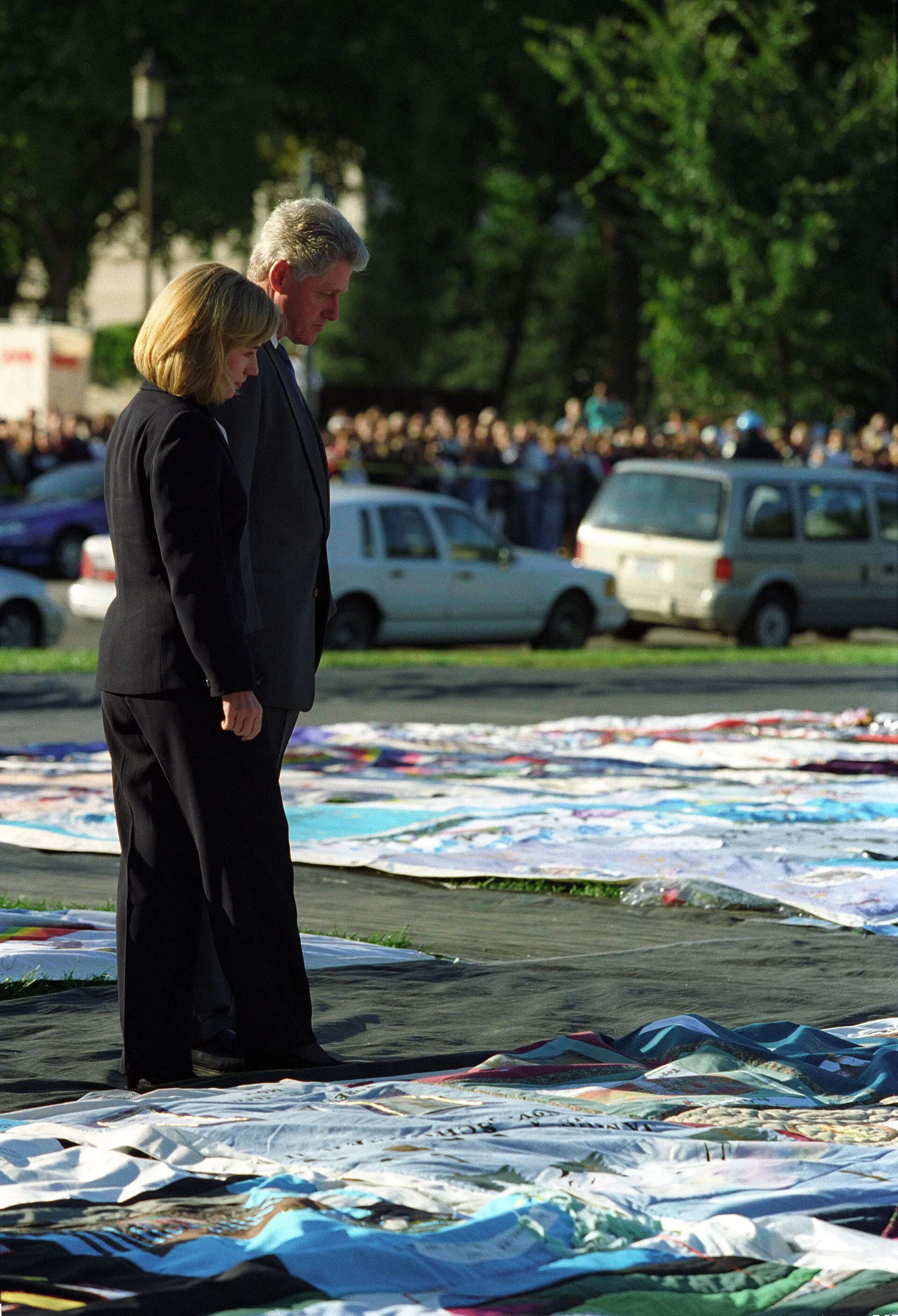
The National Mall · October 1996
Grief became a movement.
Patients and their nurses broke the law in public, gently, and dared juries to convict.
Three weeks after this photograph, California voted: medicine, again.
The AIDS Memorial Quilt on the Mall, October 1996. Photo: Ralph Alswang, White House · source · Public domain (US government work)
-
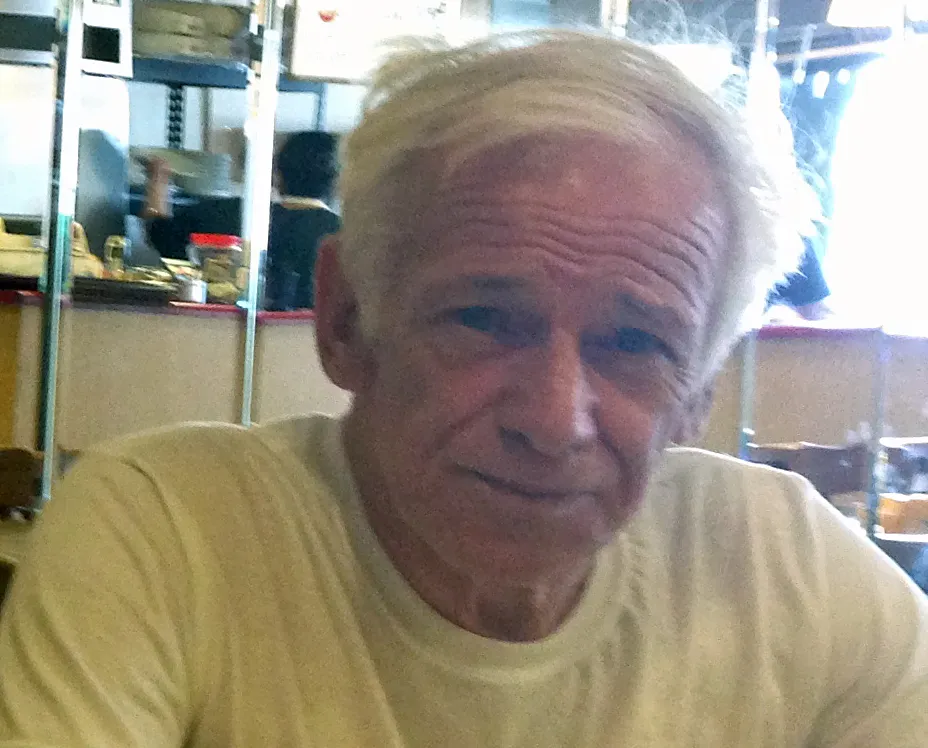
Dennis Peron, lead author of California’s Proposition 215 The AIDS Memorial Quilt on the Mall, October 1996, three weeks before Prop 215 passed The AIDS crisis & California’s Prop 215
Grief became a movement. As AIDS devastated San Francisco, cannabis eased the nausea and wasting that tormented patients. A hospital volunteer named “Brownie Mary” Rathbun baked cannabis brownies for the dying and was arrested again and again; her ally Dennis Peron, who had lost his partner to AIDS, opened the country’s first major medical dispensary. Together they drove Proposition 215, and on November 5, 1996, California became the first state to legalize medical cannabis.
- 1992: Dennis Peron opens the San Francisco Cannabis Buyers Club, the first major U.S. medical dispensary.
- Brownie Mary Rathbun bakes cannabis brownies for AIDS patients and is repeatedly arrested, becoming a folk hero.
- Nov 5, 1996: California passes Proposition 215 (the Compassionate Use Act), the first state medical cannabis law.
Mary Jane “Brownie Mary” Rathbun
A San Francisco hospital volunteer, “Brownie Mary” spent the AIDS years baking cannabis brownies and giving them free to terminally ill patients in the world’s first AIDS ward, to ease their nausea and restore appetite. Arrested three times, each arrest only drew more sympathetic attention to the cause. Her gentle defiance helped pass San Francisco’s Proposition P and, ultimately, California’s Proposition 215.
Sources 1996 California Proposition 215 · Brownie Mary Rathbun
-
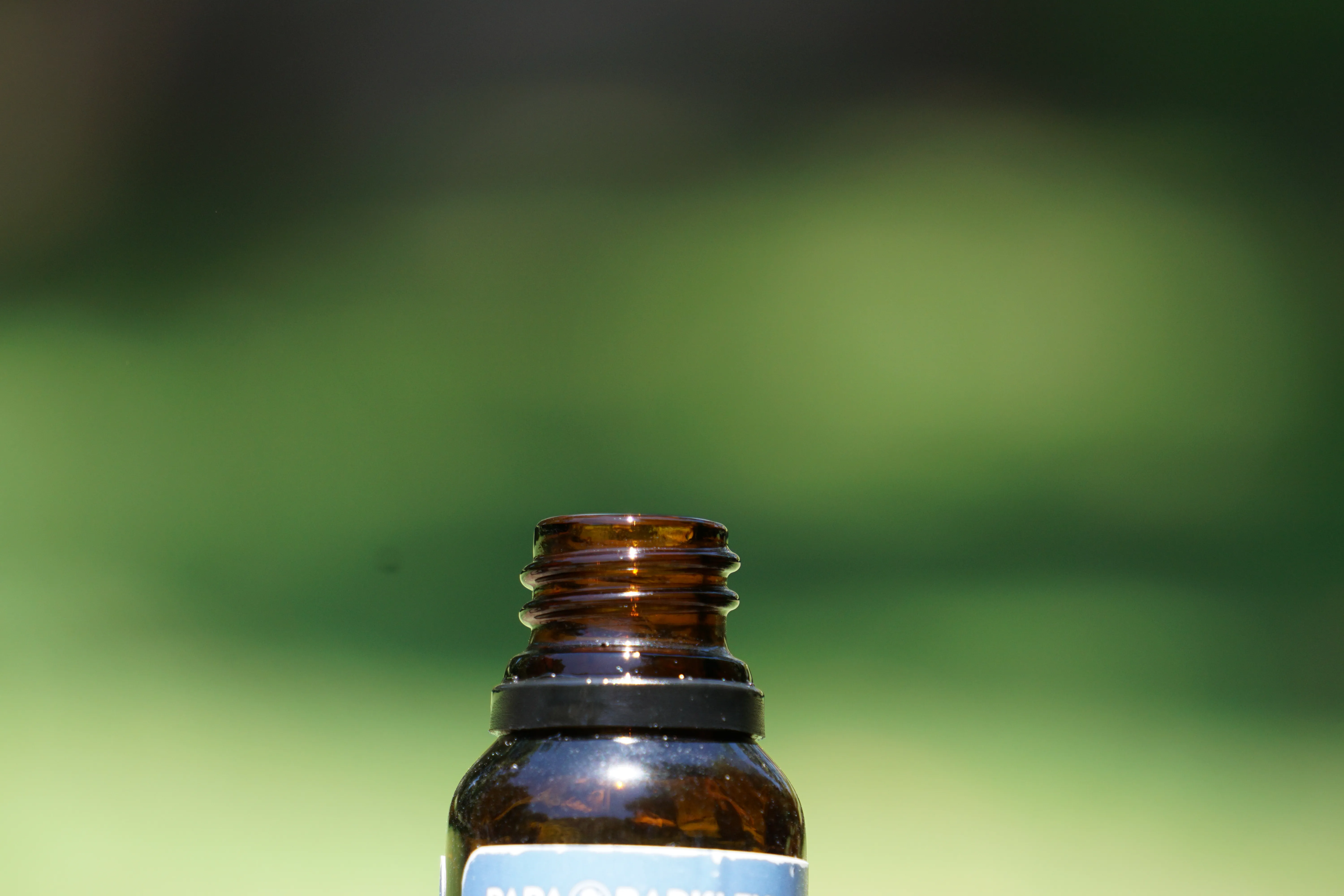
A CBD oil preparation: “cannabis without the high”. Photo: Elsa Olofsson 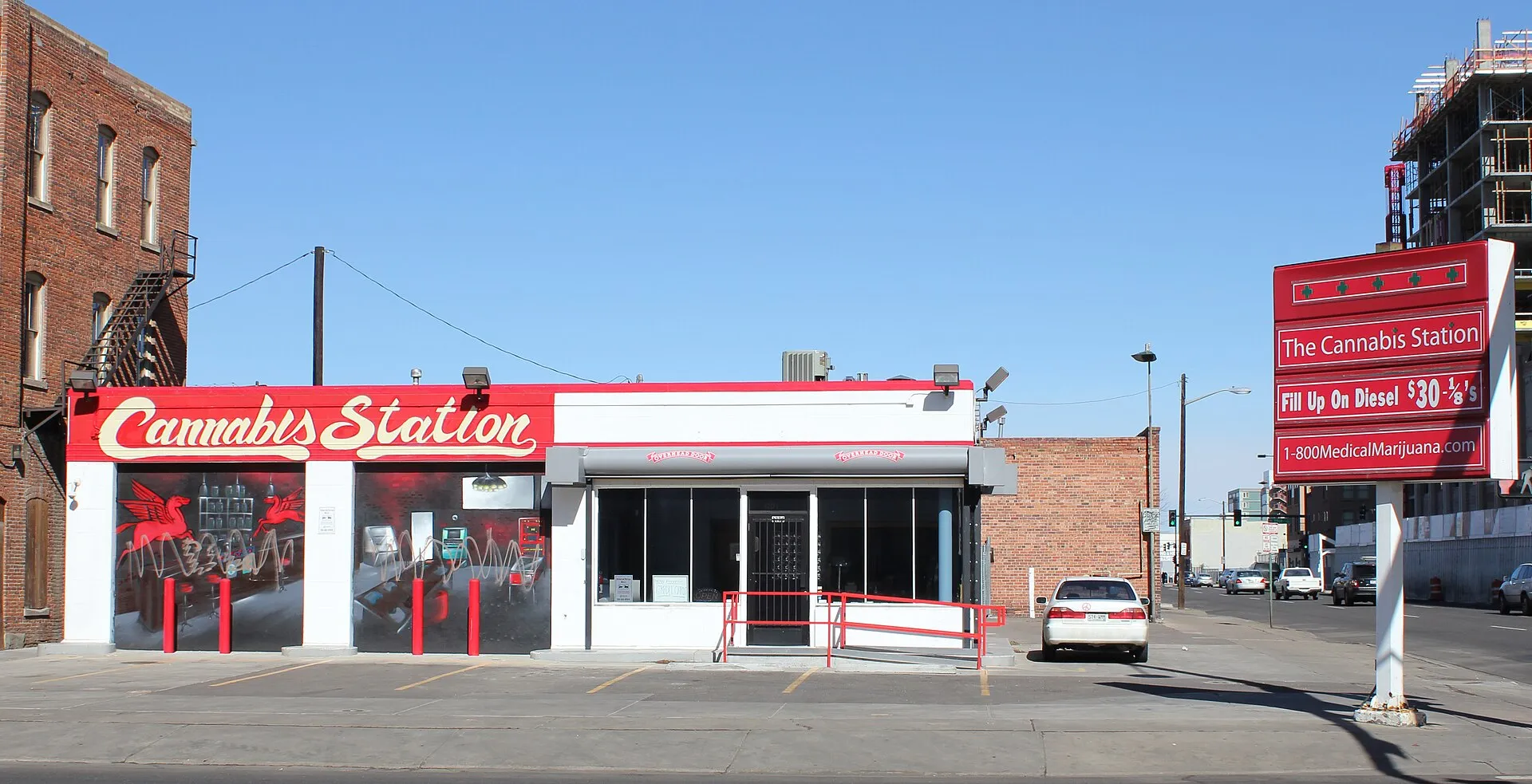
A Denver medical dispensary in a former filling station (2012). Photo: Jeffrey Beall The states rebel & the CBD awakening
California was a beginning, not an end. Oregon, Alaska, and Washington followed in 1998, and the medical model spread state by state. Then a little girl changed the conversation: Charlotte Figi, whose catastrophic epilepsy eased on a high-CBD oil, put “cannabis without the high” on the national news in 2013 and drove CBD laws across the conservative South, Georgia included. In 2018 the FDA approved Epidiolex, a purified CBD medicine, and the Farm Bill legalized hemp.
- 1998–2016: Oregon, Alaska, Washington, Maine and a majority of states adopt medical-cannabis programs.
- 2013: Charlotte Figi’s story and CNN’s “Weed” move CBD into the mainstream, sparking CBD laws nationwide.
- 2018: the FDA approves Epidiolex (purified CBD); the Farm Bill legalizes hemp (≤0.3% delta-9 THC).
Charlotte Figi
Charlotte Figi of Colorado had her first seizure at three months old. Dravet syndrome eventually brought more than 300 grand mal seizures a week. Her parents tried an oil made from a cannabis strain high in CBD and low in THC, and the seizures fell to two or three a month. The growers renamed the strain Charlotte’s Web in her honor, and her recovery moved medical cannabis laws across the country, Georgia’s included. In 2018 the FDA approved a purified CBD drug for her condition. Charlotte died in April 2020, at thirteen.
Sources Charlotte’s Web (cannabis) · FDA approves Epidiolex (2018)
-
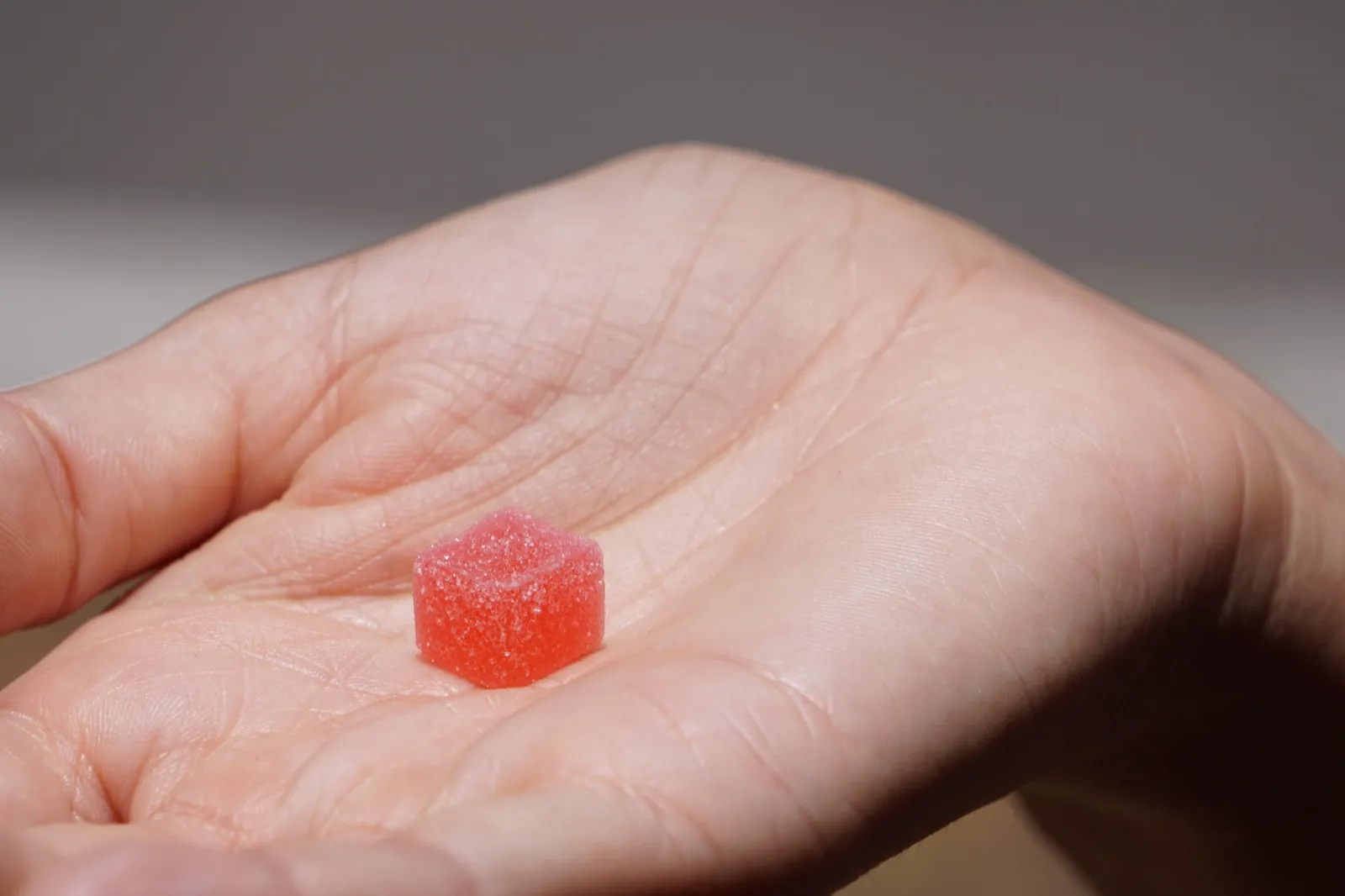
Hemp-derived cannabinoid gummies, sold nationwide under the Farm Bill 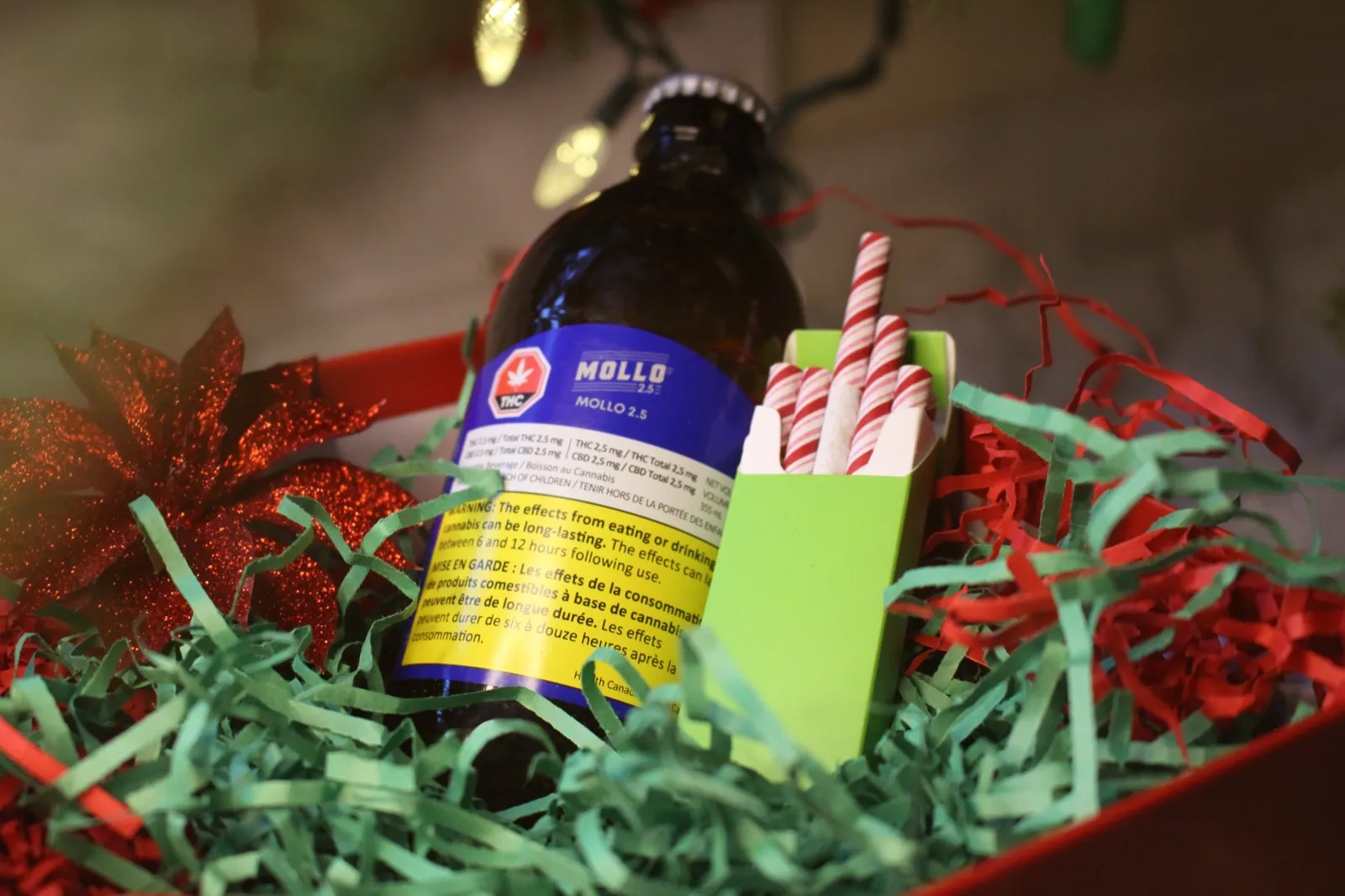
A THC seltzer: the booming alcohol alternative 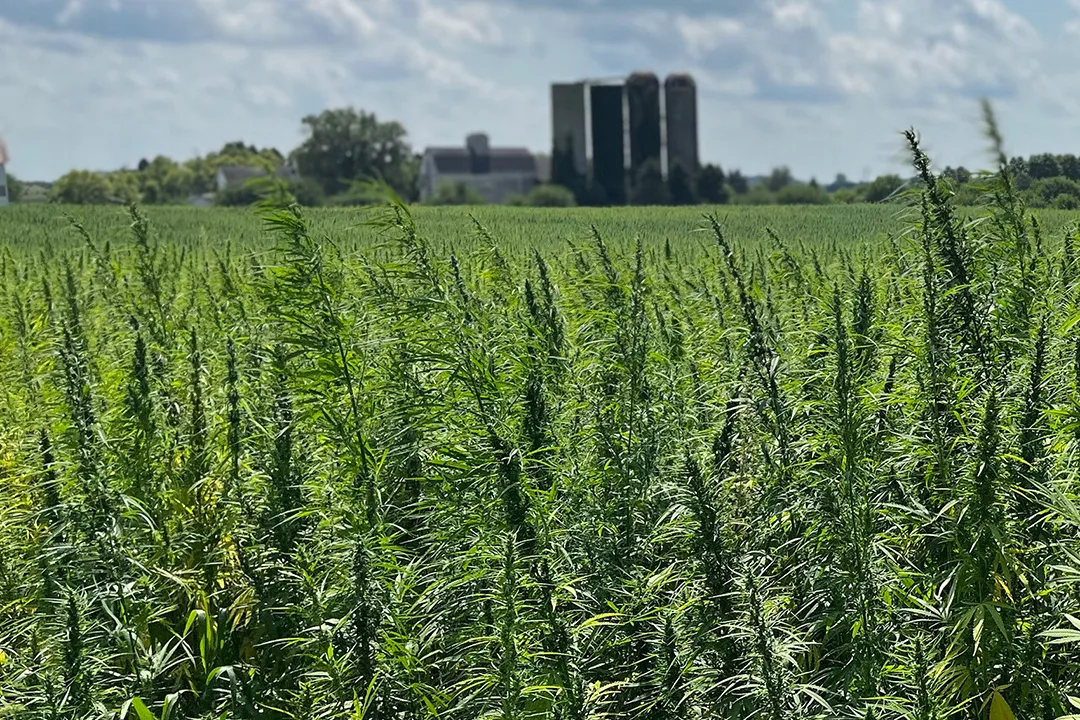
A hemp field, legalized federally in 2018 Hemp blurs the line and cracks prohibition
A farm-policy footnote began erasing the line between “hemp” and “marijuana.” The 2018 Farm Bill legalized hemp, defined as cannabis at or under 0.3% delta-9 THC by dry weight, and pulled it out of the Controlled Substances Act. That 0.3% cutoff is arbitrary chemistry, because hemp and marijuana are the same plant; and since the cap is measured by weight, a heavy gummy can carry a full, intoxicating dose and still count as “hemp.” THC gummies, delta-8, and low-dose THC seltzers spread nationwide, sold by mail and in gas stations, smoke shops, and liquor stores, even in states that ban dispensary cannabis. With millions of Americans suddenly buying legal THC over the counter, the old line between “drug” and “crop” started to look like what it always was, a legal fiction. It is all in flux, though: a 2025 law redefining hemp by total THC takes effect around November 2026.
- Dec 2018: the Farm Bill legalizes hemp (≤0.3% delta-9 THC by dry weight), removing it from the Controlled Substances Act.
- The line is arbitrary: hemp and marijuana are one species, so a cap measured “by weight” makes intoxicating delta-9 gummies and delta-8 products federally legal and shippable, a multibillion-dollar market outside dispensaries.
- THC beverages (Cann, BRĒZ, Cycling Frog) boom as an alcohol alternative, roughly $1.1B in U.S. sales in 2024, growing about 25% a year.
- In jeopardy: a 2025 federal law redefines hemp by TOTAL THC with a tiny per-container cap (effective ~Nov 2026), which could erase an estimated 90–95% of these gummies and drinks.
Sources CRS: hemp & the 2018 Farm Bill · THC-drink market growth (Brightfield)
-
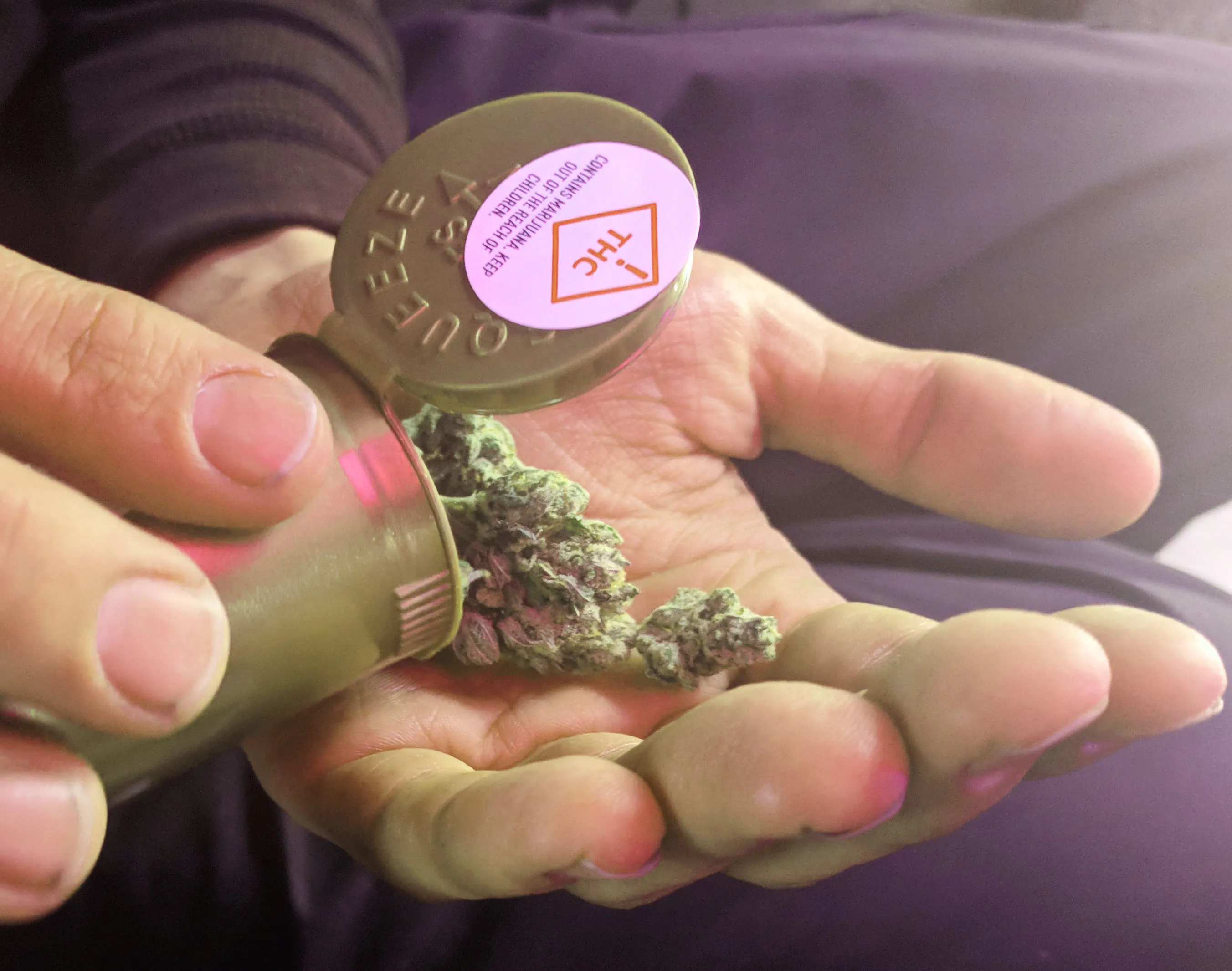
Adult-use cannabis for sale in Denver, Colorado; not legal in Georgia 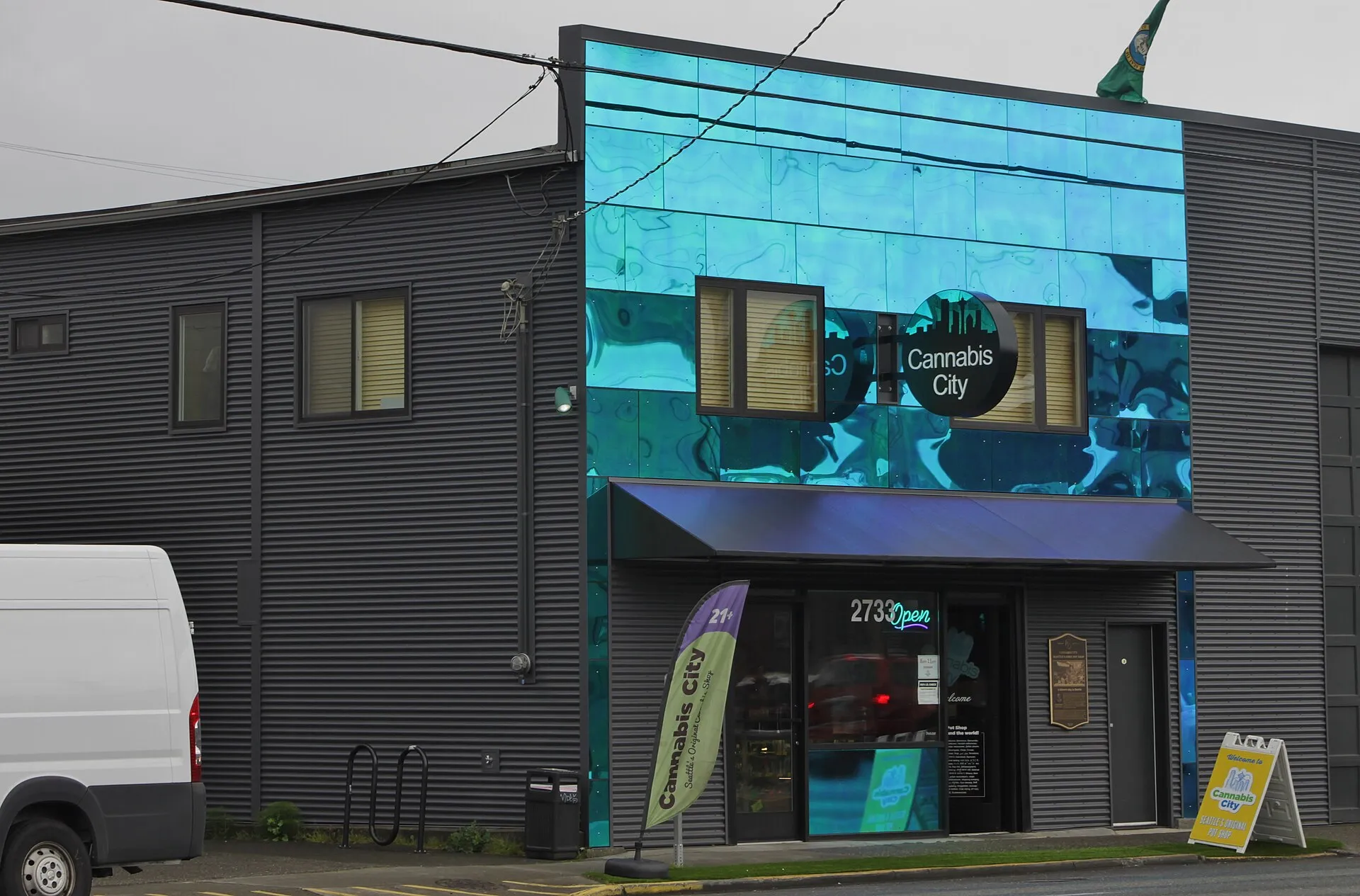
Cannabis City, Seattle, site of Washington’s first legal sale in 2014. Photo: SounderBruce The adult-use wave, elsewhere in America
A second, separate movement followed the medical one. On November 6, 2012, Colorado and Washington became the first places in the world to legalize cannabis for any adult 21+, “regulated like alcohol.” A wave followed, state by state, reaching 24 states plus Washington, D.C. by 2026. This is a distinct story from medical access, and an important contrast: Georgia has not joined it. Georgia is a medical-only state, and nothing on this site implies recreational sales here.
- Nov 6, 2012: Colorado and Washington legalize adult use; Colorado’s first retail sales open Jan 1, 2014.
- By 2026: 24 states plus Washington, D.C. allow adult use; Georgia is not among them.
- 2024–2026: federal momentum builds; an April 2026 order moves FDA-approved and state-licensed medical cannabis to Schedule III (not legalization).
Sources Colorado Amendment 64 (2012) · Legality of cannabis by U.S. jurisdiction
-
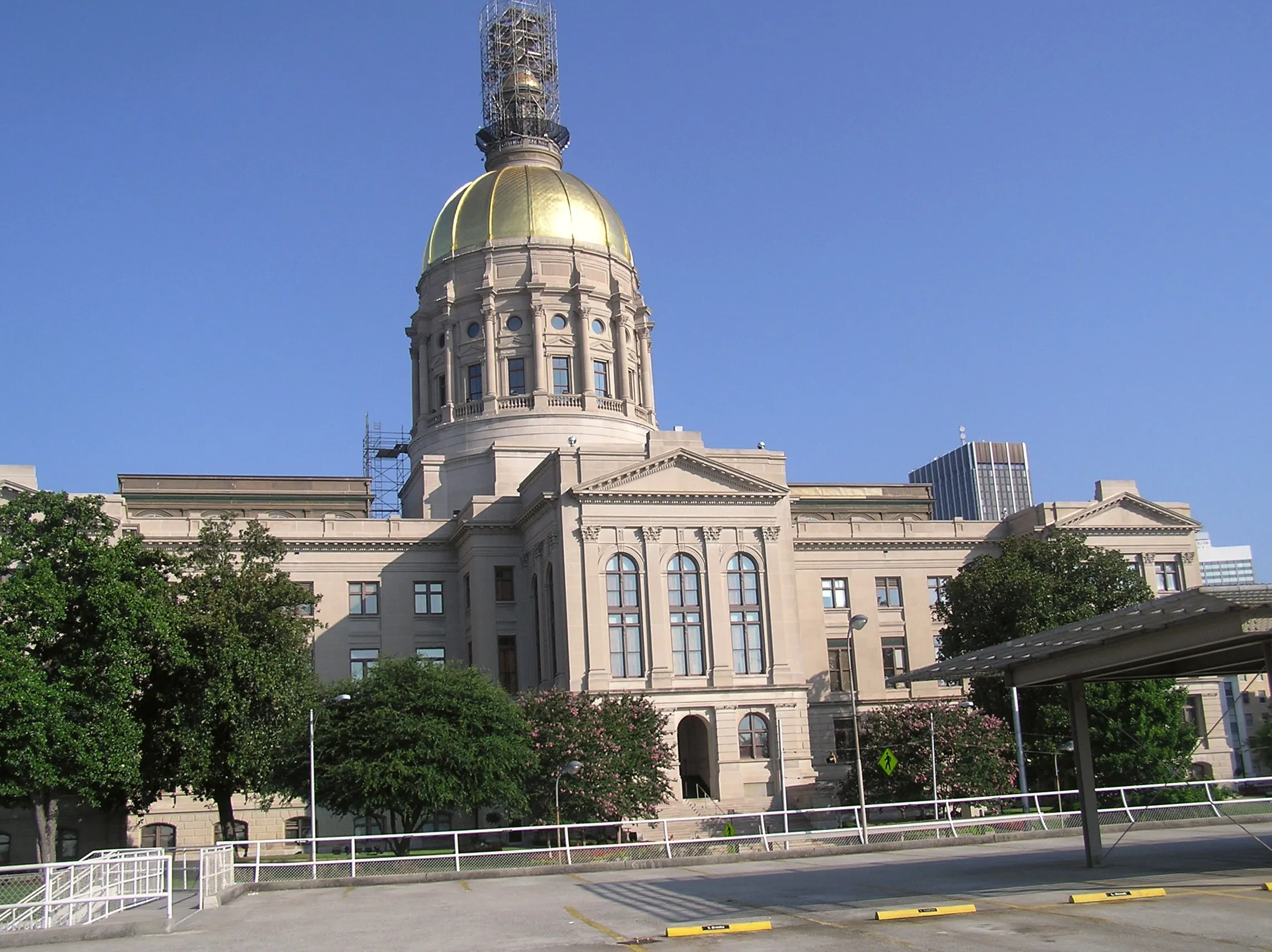
Atlanta, Georgia · 2015
The last region to move was the American South.
It moved for its smallest patients first.
This chapter is still being written.
Georgia State Capitol, Atlanta · source · CC BY-SA (Wikimedia Commons; see source for author)
-
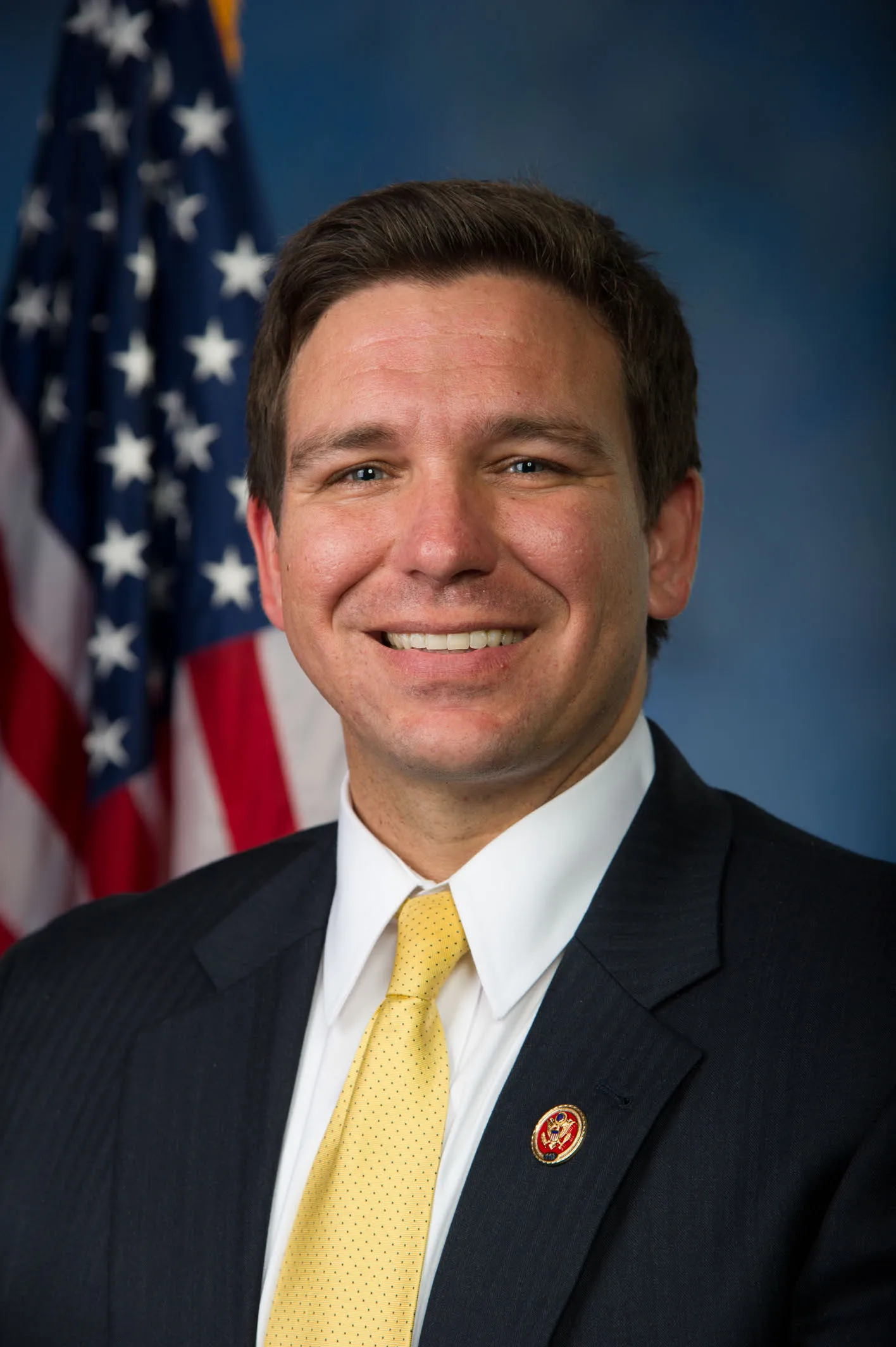
Gov. Ron DeSantis, who signed Florida’s smokable-flower law Florida: the South’s medical giant
Florida became the South’s biggest medical market. It started small in 2014 with a low-THC “Charlotte’s Web” law, then in 2016 voters wrote medical cannabis into the state constitution with about 71% of the vote. Smokable flower followed in 2019 after Gov. Ron DeSantis pressed the legislature. By 2026 nearly a million Floridians held cards, yet the state stayed medical-only: a 2024 adult-use measure won 56% of the vote and still failed Florida’s unusually high 60% bar.
- 2014: the Compassionate Medical Cannabis Act legalizes low-THC oil; a full-medical ballot measure narrowly misses 60%.
- Nov 2016: voters pass Amendment 2 (~71%), writing medical cannabis into the state constitution.
- 2019: Gov. DeSantis signs a law legalizing smokable flower for patients.
- Nov 2024: adult-use Amendment 3 wins ~56% but fails the 60% supermajority; Florida stays medical-only, with ~929,000 patients and 760+ dispensaries.
Cathy Jordan
Diagnosed with ALS in 1986, Cathy Jordan was told patients usually live two to five years. On a Florida visit in 1989 a friend handed her a locally grown strain called Myakka Gold, and she said she felt the disease stop. Jordan settled in Manatee County, led the Florida Cannabis Action Network, and lobbied the legislature from her wheelchair; the Cathy Jordan Medical Cannabis Act, filed in 2013, never got a hearing, and that same week her husband faced cultivation charges that were later dropped. She outlived her prognosis by decades, dying on July 4, 2024, at 74.
-
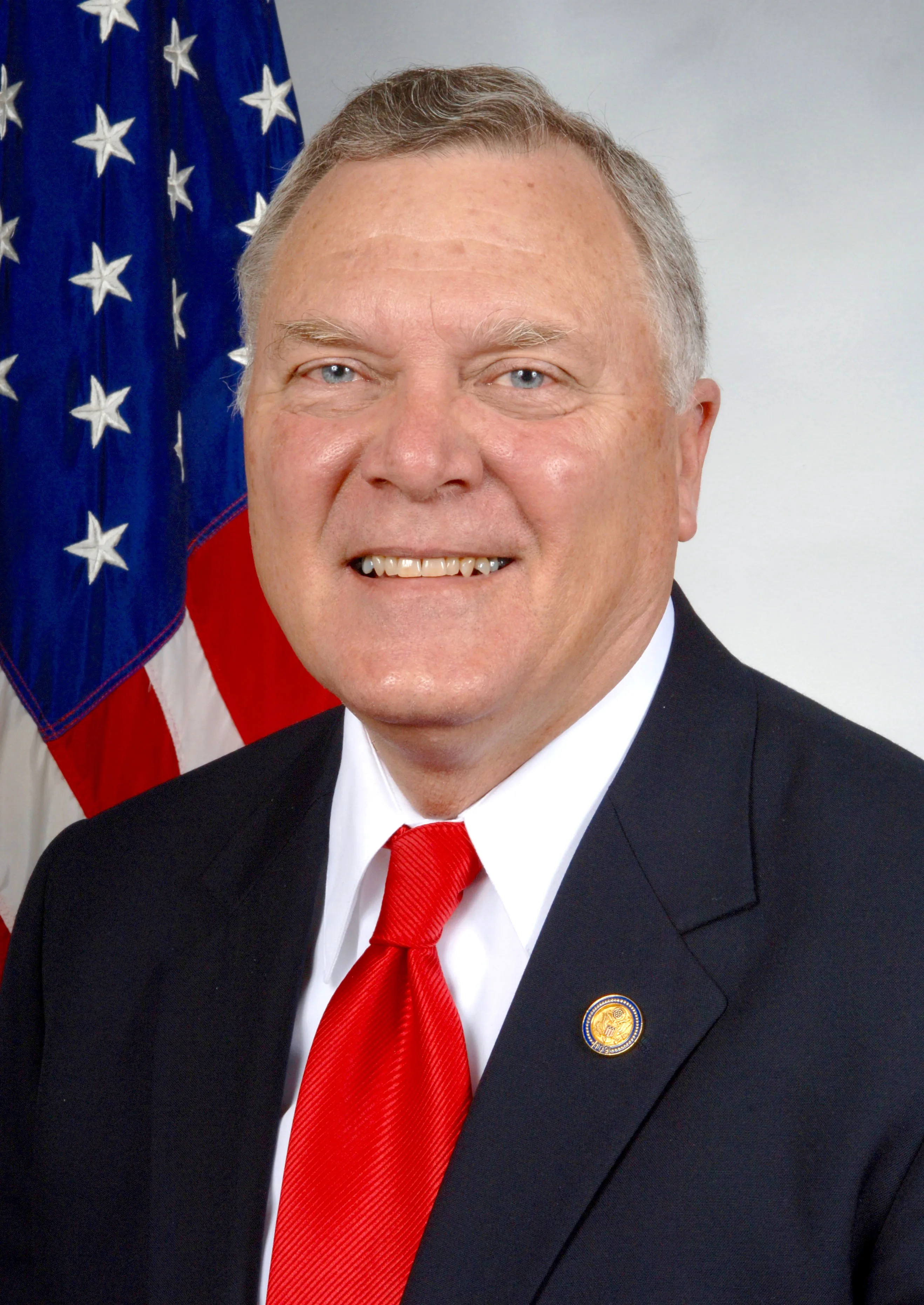
Gov. Nathan Deal, who signed Haleigh’s Hope (HB 1) in 2015 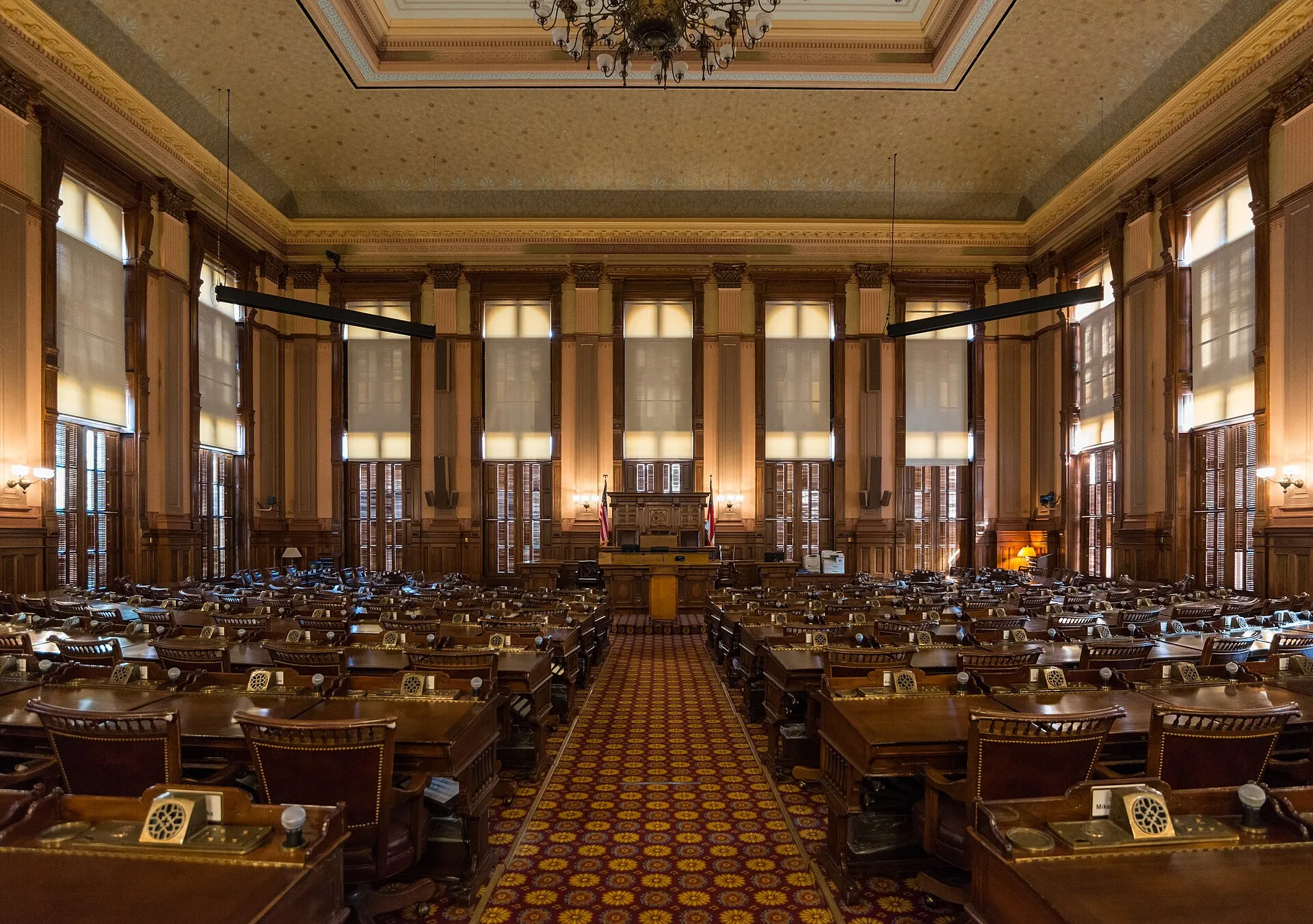
The Georgia House chamber, where Haleigh’s Hope passed. Photo: DXR Georgia’s first steps
Georgia had tried once before: a 1980 research law that, depending on federal cooperation that never came, delivered medicine to no one. The real turning point was a little girl, Haleigh Cox, whose seizures eased on cannabis oil her family could only obtain by moving to Colorado. On April 16, 2015, Gov. Nathan Deal signed Haleigh’s Hope Act, but it held a cruel paradox: patients could possess low-THC oil, yet had no legal way to buy it in Georgia.
- 1980: Georgia’s Controlled Substances Therapeutic Research Act passes, then stalls, supplying no patients.
- Apr 16, 2015: Gov. Deal signs Haleigh’s Hope Act, legalizing possession of low-THC oil (≤5% THC).
- 2017–2018: SB 16 and HB 65 broaden qualifying conditions to include intractable pain and PTSD.
Rep. Allen Peake
Haleigh’s Hope let patients possess low-THC oil but gave them no legal way to buy it. So its chief sponsor, Rep. Allen Peake of Macon, helped run an underground network, receiving cannabis oil from Colorado and delivering it to hundreds of registered Georgia patients, funded by roughly $100,000 a year in donations, openly risking felony charges. “If civil disobedience was involved,” he said, “it’s been absolutely worth it.”
Sources Cannabis in Georgia (U.S. state) · Georgia’s low-THC oil law (MPP)
-
Georgia State Capitol, Atlanta, where the Hope Act became law Georgia builds a program
To fix the “possess-but-cannot-buy” trap, Georgia finally authorized growing the medicine in-state. The 2019 Hope Act created a regulated supply chain and the Georgia Access to Medical Cannabis Commission, but the path to the shelf ran through years of delay and litigation. Not until April 2023, eight years after Haleigh’s Hope, did the first dispensaries open in Marietta and Macon. Months later Georgia became the first state in the nation to dispense medical cannabis through independent pharmacies.
- Apr 17, 2019: Gov. Brian Kemp signs HB 324 (Georgia’s Hope Act), authorizing in-state production and creating the GMCC.
- Apr 2023: the first dispensaries open in Marietta and Macon, the first legal sales in state history.
- Oct 2023: Georgia becomes the first state to let independent pharmacies dispense medical cannabis.
Sources Georgia program history (GMCC) · First Georgia dispensaries open (2023)
-

Gov. Tate Reeves, who signed the Mississippi Medical Cannabis Act Mississippi: the vote the court undid
Mississippi’s is the most dramatic Southern story. In November 2020, about 74% of voters, in one of the nation’s most conservative states, approved medical cannabis at the ballot box. Then the state Supreme Court threw the result out on a technicality: the constitution’s signature rule still assumed five congressional districts, though Mississippi had dropped to four after the 2000 census, making it mathematically impossible to qualify any initiative. The legislature finished the job by statute in 2022, and the first legal sales, flower included, began in January 2023.
- Nov 2020: ~74% of Mississippians approve Initiative 65, a citizen-led medical cannabis amendment.
- May 2021: the Mississippi Supreme Court voids it 6–3 on an obsolete five-district signature rule, striking down the whole ballot-initiative process.
- Feb 2022: Gov. Tate Reeves signs the Mississippi Medical Cannabis Act; first sales (flower included) begin Jan 2023.
Sources MS Supreme Court overturns Initiative 65 · Mississippi legalizes medical cannabis (NPR)
-
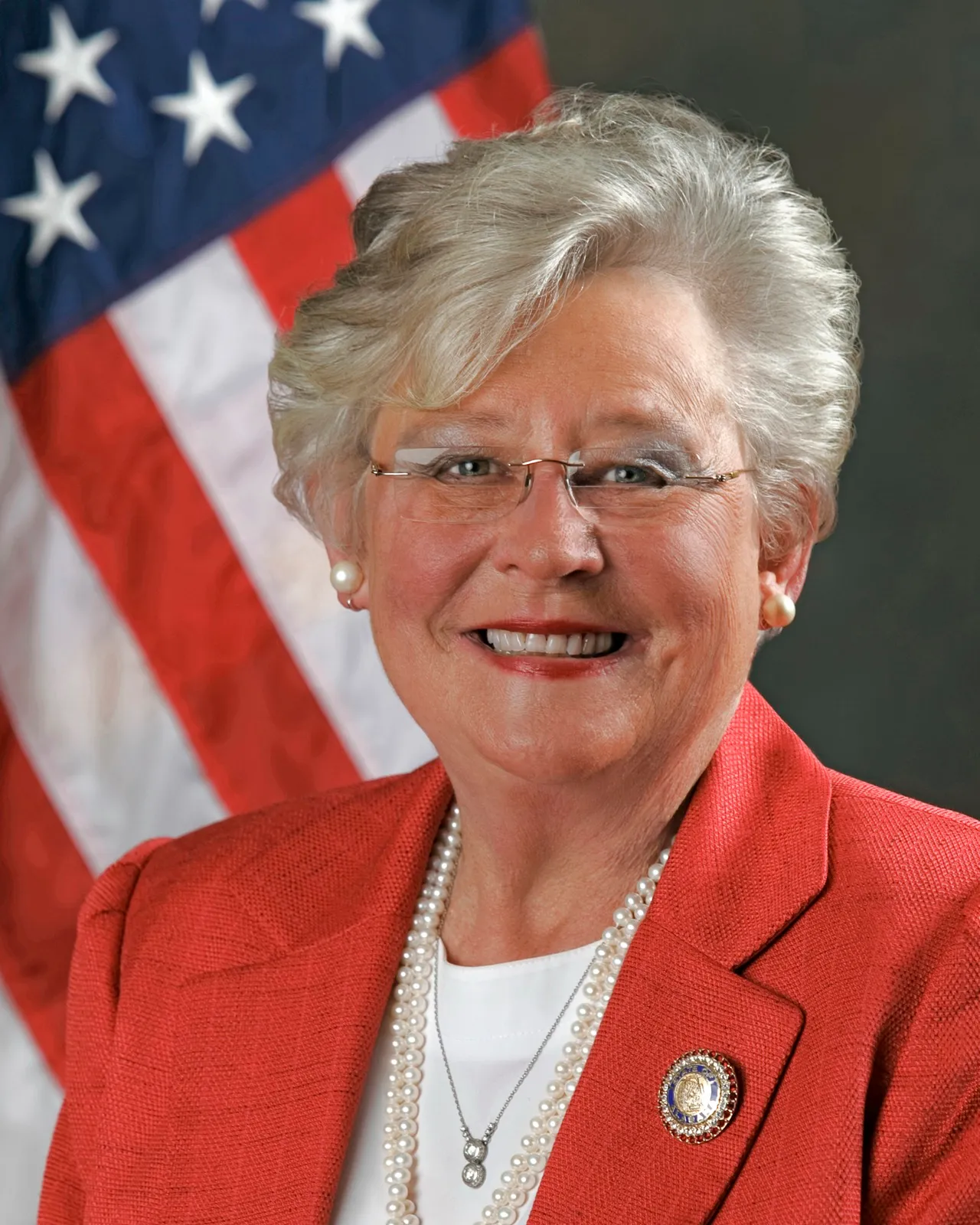
Gov. Kay Ivey, who signed Alabama’s 2021 Compassion Act Alabama: a law five years in waiting
Alabama passed the Darren Wesley “Ato” Hall Compassion Act in 2021, then made patients wait nearly five years. A relentless cycle of license challenges and court orders froze the program: awards were issued, voided, re-issued, and blocked again and again. Not until June 4, 2026 did the first dispensary open, in Montgomery. Alabama’s is also the South’s most restrictive program: no flower, no vaping, no ordinary edibles; only tablets, capsules, tinctures, patches, and oral gels (and a flavored gel cube may only be peach).
- May 2021: Gov. Kay Ivey signs the Compassion Act, making Alabama the 36th medical-cannabis state.
- 2023–2025: licensing is repeatedly awarded, voided, and tied up in court; the program stays dark for years.
- Jun 4, 2026: the first legal sale finally happens at a Montgomery dispensary; no flower, vapes, or candy-style edibles are allowed.
Sources Alabama patients finally get access (NORML) · Alabama medical cannabis (MPP)
-
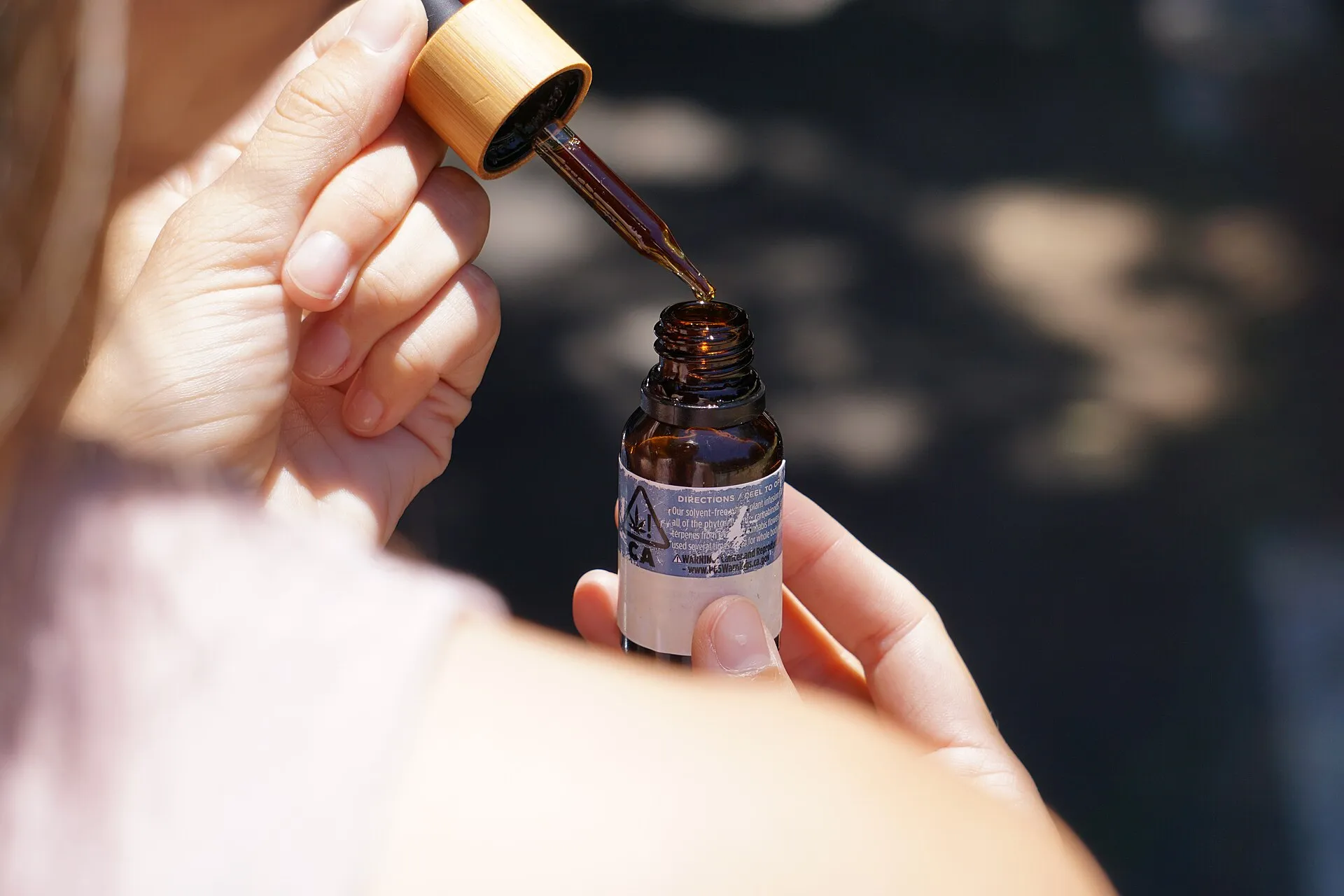
A measured oil tincture, the format at the heart of Georgia’s program. Photo: Elsa Olofsson, CBD Oracle 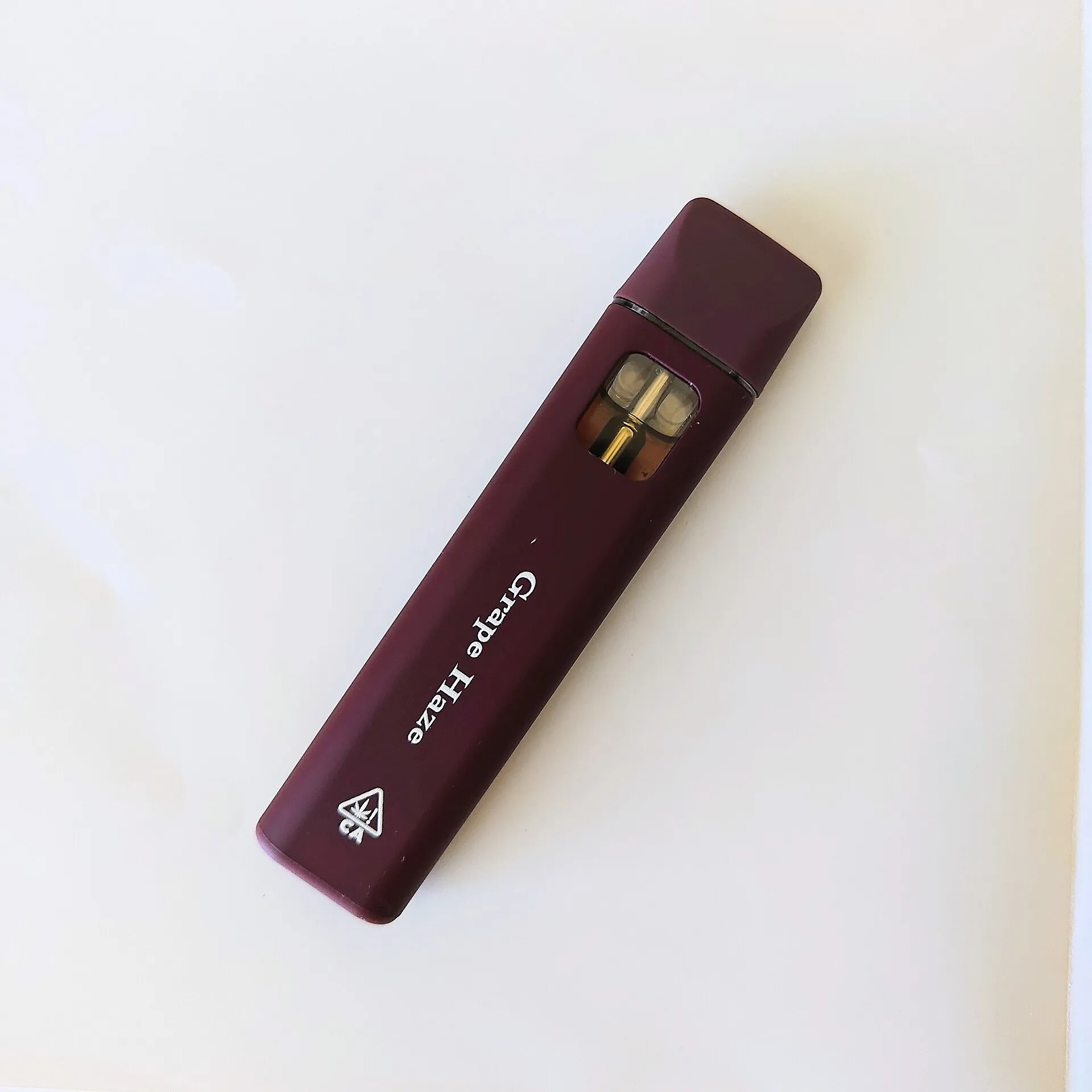
A regulated vaporizer product, the format SB 220 legalized for patients 21+ Georgia today: SB 220 & a fuller program
On May 12, 2026, Gov. Kemp signed SB 220, the “Putting Georgia’s Patients First Act,” the biggest expansion since 2019. It scrapped the old 5% THC cap for a 12,000 mg total-THC limit and, for the first time, allowed vaporization for registered patients 21 and older, including vaporized flower at home. Smoking stays prohibited. As the program goes live on July 1, 2026, vape products and flower reach dispensary and pharmacy shelves, and Georgia remains, deliberately, a medical-only state.
- May 12, 2026: Gov. Kemp signs SB 220, setting a 12,000 mg total-THC limit and vaporization for patients 21+.
- Jul 1, 2026: the expanded program goes live; vape products and flower arrive at Trulieve, Fine Fettle, and Botanical.
- Smoking and edibles remain prohibited; Georgia stays medical-only, with no recreational sales.
Sources Georgia signs SB 220 (2026) · What SB 220 means (Trulieve)
.jpg)


._Wellcome_L0005752.jpg)


_-_Levee_at_New_Orleans.jpg)
.jpg)
.jpg)


.jpg)


_product_in_Denver,_Colorado.jpg)


